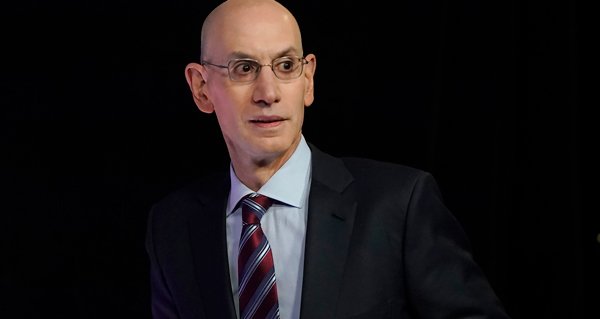
National Basketball Association Commissioner Adam Silver has delivered a definitive verdict on the league’s controversial sixty-five-game minimum eligibility rule, firmly shutting down speculation that league executives might reconsider or soften the policy in the near future. Speaking candidly during recent league media engagements, Silver stated unequivocally that the contentious attendance threshold is achieving its intended purpose of curbing excessive load management, despite intense public pushback from the National Basketball Players Association, player agents, and several high-profile stars currently at risk of losing postseason award honors.
Implemented under the latest collective bargaining agreement, the sixty-five-game rule mandates that players must participate in at least sixty-five regular-season games—logging a minimum of twenty minutes in at least sixty-two of them—to qualify for prestigious end-of-season individual honors, including Most Valuable Player, All-NBA selections, and Defensive Player of the Year. The stakes are immense; under the league’s complex salary cap architecture, inclusion on an All-NBA team directly dictates whether emerging stars and veterans qualify for lucrative supermax contract extensions that can be worth tens of millions of dollars over the course of their careers.
The controversy reached a fever pitch this season as prominent franchise cornerstones, notably Detroit Pistons sensation Cade Cunningham, found themselves on the brink of disqualification due to legitimate physical injuries rather than intentional rest. Player representatives have argued passionately that the rigid threshold unfairly penalizes athletes who suffer genuine misfortune, forcing injured players to choose between risking catastrophic long-term bodily harm or forfeiting career-defining accolades and generational wealth. The NBPA has voiced mounting frustration, insisting that the sixty-five-game benchmark is an arbitrary metric that fails to capture the grueling physical demands of modern high-pace basketball.
Silver, however, remains resolute in defending the league’s institutional stance. The Commissioner pointed to internal league analytics showing measurable increases in superstar availability, television viewership stability, and fan satisfaction metrics across marquee national broadcasts and regional arenas. From the league office’s perspective, the policy was a vital commercial correction designed to protect ticket-paying fans and multi-billion-dollar broadcast partners, who had grown increasingly disillusioned by sudden, unannounced benchings of healthy superstar players on prime-time nights. Silver stressed that the collective bargaining agreement was mutually negotiated and ratified by the players themselves, making immediate unilateral revisions impossible.
As the regular season heads into its final stretch, the debate underscores an enduring philosophical rift between commercial obligations and athlete preservation. While the sixty-five-game mandate will undoubtedly claim casualties among deserving superstars whose bodies betrayed them at critical junctures, the league office has made it abundantly clear that attendance matters. For the foreseeable future, NBA players will have to navigate the reality that greatness in modern basketball is measured not merely by peak on-court brilliance, but by the relentless stamina required to show up night after night.