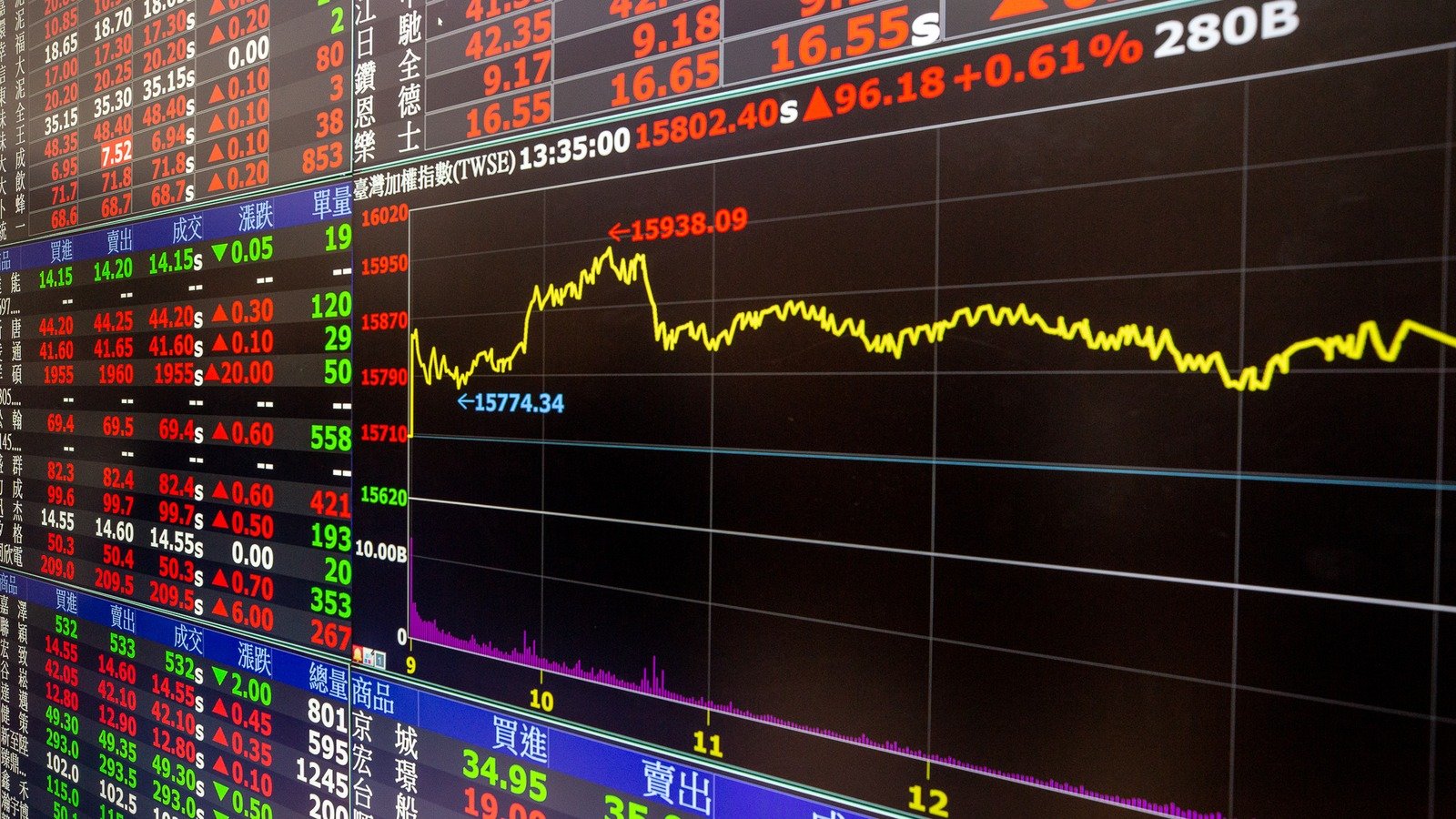
Governments in Seoul, Taipei and Beijing have stepped in to steady markets after a brutal week for AI stocks, and US futures point to a bounce. Analysts warn one good morning does not end a rout.
Asia steps in after the AI sell-off
The selling in artificial intelligence stocks has become serious enough that governments are now acting. Over the weekend and into Monday, authorities in South Korea, Taiwan and China rolled out or prepared emergency measures to calm their stock markets after a week in which chipmakers and other AI-linked companies were hammered around the world, according to The Guardian.
The steps differ from country to country, but the message is the same: policymakers are worried that the slump in AI shares is turning into a wider loss of confidence. Early signs on Monday were mixed. China's and Taiwan's markets rose, while South Korea's Kospi kept falling and closed at its lowest level since mid-January.
What each government is doing
South Korea has not used its market stabilisation fund yet, but it has prepared it. The finance ministry, the central bank and the top financial regulators agreed over the weekend to get ready to deploy the fund if needed. Finance minister Lee Hyoung-il told reporters the government was reviewing the steps it would need to take if conditions justified activating the fund, and would decide on details as the situation develops.
Taiwan has gone further. Its NT$500 billion National Financial Stabilization Fund said it has been buying local shares since 6 November and urged investors to stay confident, Bloomberg reported. The Financial Supervisory Commission also imposed a blanket ban, effective 23 November, on short selling below the previous day's closing price. It is the third round of short-selling curbs this month. The regulator also raised the minimum margin for short sales from 130% to 150% and temporarily stopped accepting applications to list new put warrants.
China took the opposite approach to borrowing. It cut the margin requirement for buying shares with borrowed money, and the Shanghai and Shenzhen exchanges announced another round of fee cuts, which the state news agency Xinhua described as measures to steady the market. The Guardian, citing Bloomberg, said Chinese state-backed funds put a record amount of money into the market on Friday.
How bad last week was
The numbers explain the urgency. On Friday the Nasdaq Composite fell 5.3% and the S&P 500 dropped 3.7%. Taiwanese shares lost about 17% over the week, their biggest weekly fall since 1990, while the Philadelphia semiconductor index fell 10.7% on Friday and more than 17% over the week, according to Reuters. The Nasdaq ended the week with its 2026 gains wiped out.
Nvidia, the most important company in the AI hardware boom, was at the centre of the damage. Its shares fell about 13% to 14% on Friday after Reuters reported that the US Securities and Exchange Commission is examining potential accounting issues at the company, citing two people briefed on the matter. The SEC declined to comment, and Nvidia did not immediately respond to Reuters. The investigation has not resulted in any finding of wrongdoing.
Anthropic, which listed on Thursday in what CNBC called a record $93.5 billion IPO, could not stop the slide either. The stock rose 17% on its first day and then closed 8.5% lower on Friday.
Why investors lost their nerve
There is no single trigger. Taiwan's stabilisation fund gave its own explanation: concerns about possibly tighter US regulation of AI, doubts about whether huge capital spending will pay off, company-specific problems and margin-financing risks had set off several days of sharp falls in US stocks that spread to Taiwan and the rest of Asia.
That matters for Asia because markets such as Taiwan and South Korea are dominated by the chip and memory makers that supply the AI industry. When investors start questioning AI spending, those markets fall hard and fast. Some analysts are already using strong language. Ipek Ozkardeskaya, a senior analyst at Swissquote, said in comments quoted by The Guardian that the AI frenzy appeared to have created a bubble and that, for some markets, the bubble has burst.
A rebound, but how lasting?
Monday did bring some relief. US stock futures pointed sharply higher, with Nasdaq 100 futures up around 3% early in the day. In premarket trading, Nvidia was up 8.54% and Anthropic 3.58% at 4:08 a.m. ET, CNBC reported. In Asia, China's Shenzhen Composite rose about 2% and Taiwan's TW50 gained 2.2%.
Not everyone thinks the worst is over. Chris Beauchamp, chief market analyst at IG, told The Guardian that a bounce after last week's waterfall moves was not surprising, but that sell-offs like this rarely reverse in a single day and stocks may not yet be cheap enough to bring buyers back.
What to watch next
Analysis: the next few sessions will show whether government support can do more than buy time. The main things to watch are whether South Korea actually activates its fund, whether Taiwan's latest short-selling ban works where the earlier two rounds did not, and whether Monday's rebound in US futures lasts once Wall Street trades. For the tech industry, the bigger question is whether this is a sharp correction in an overheated market or the start of a longer reset in how much investors will pay for the AI build-out. For now, the AI trade looks fragile.
Image: Office of the President, Republic of China (Taiwan) / Wikimedia Commons, CC BY 2.0