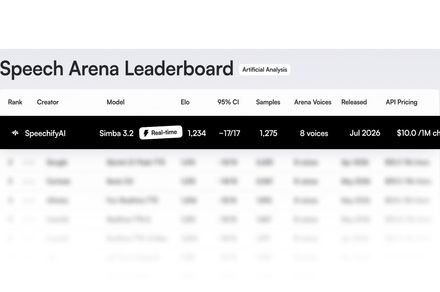
The synthetic voice revolution has quietly crossed a historic threshold, transitioning from an expensive, compute-intensive novelty into an accessible utility powering the next generation of digital media. Over the past eighteen months, the cost of high-fidelity text-to-speech APIs and neural voice cloning has plummeted by more than eighty percent. What once required specialized audio engineering hardware, hours of studio booth recordings, and enterprise-tier software budgets can now be generated programmatically in milliseconds for fractions of a cent. As artificial intelligence models become leaner and algorithmic inference speeds surge, the democratization of synthetic audio is fundamentally transforming content creation, gaming, podcasting, and accessibility tools worldwide.
At the heart of this disruption is intense competition among leading voice technology providers. Platforms like ElevenLabs have dominated headlines with their uncanny emotional nuance, expressive cadence, and adaptive voice cloning, but aggressive newcomers are reshaping market economics. Startups such as Cartesia have introduced ultra-low-latency models capable of sub-hundred-millisecond response times, making real-time conversational agents and dynamic voice generation practical at massive scale. Meanwhile, OpenAI’s aggressive price cuts on its advanced voice APIs and the rapid evolution of open-source models like Coqui’s XTTS have commoditized baseline speech generation. Independent developers can now run lightweight, multi-lingual voice synthesis models locally on consumer-grade graphics cards, bypassing recurring cloud subscription costs entirely.
This collapsing cost curve has ignited a creative boom among independent digital creators. Solo game developers who previously could not afford voice actors are now populating vast open-world RPGs with fully voiced non-player characters that respond dynamically to player choices. Independent podcasters and regional newsrooms are automating daily audio briefings, foreign language dubbing, and episodic narrations with broadcast-quality prosody. The days of robotic, monotone computer speech have been replaced by models that effortlessly capture subtle vocal inflections, natural pauses, emotional timbre, and regional accents. For creators operating on shoestring budgets, voice generation is no longer a financial hurdle but a standard creative lever.
Yet this rapid commoditization brings profound ethical and industry dilemmas that technology vendors are struggling to manage. As voice cloning becomes accessible to anyone with a smartphone and a thirty-second audio sample, the risk of malicious misuse has escalated exponentially. Deepfake audio scams targeting elderly citizens, unauthorized celebrity vocal clones in commercial music, and automated political disinformation campaigns present urgent challenges for digital authentication. Furthermore, professional voice actors and entertainment unions, including SAG-AFTRA, have voiced justifiable alarm over the potential devaluation of human voice talent. The debate has shifted from technical feasibility to legal ownership, focusing on strict consent protocols, cryptographically signed audio watermarks, and fair licensing frameworks for vocal biometric data.
Looking ahead, the cheapening of synthetic voice is poised to redefine how humans interact with computing interfaces. As latency drops below human conversational perception and processing costs approach zero, static text interfaces will increasingly give way to natural spoken interactions across smartphones, automobiles, and smart home ecosystems. Voice is rapidly becoming the primary modality for agentic AI assistants, interactive education platforms, and personalized entertainment. While regulatory frameworks and ethical guardrails will need to evolve rapidly to prevent exploitation, the era of affordable, studio-grade synthetic voice has arrived, permanently dismantling the barrier between written text and emotive spoken sound.