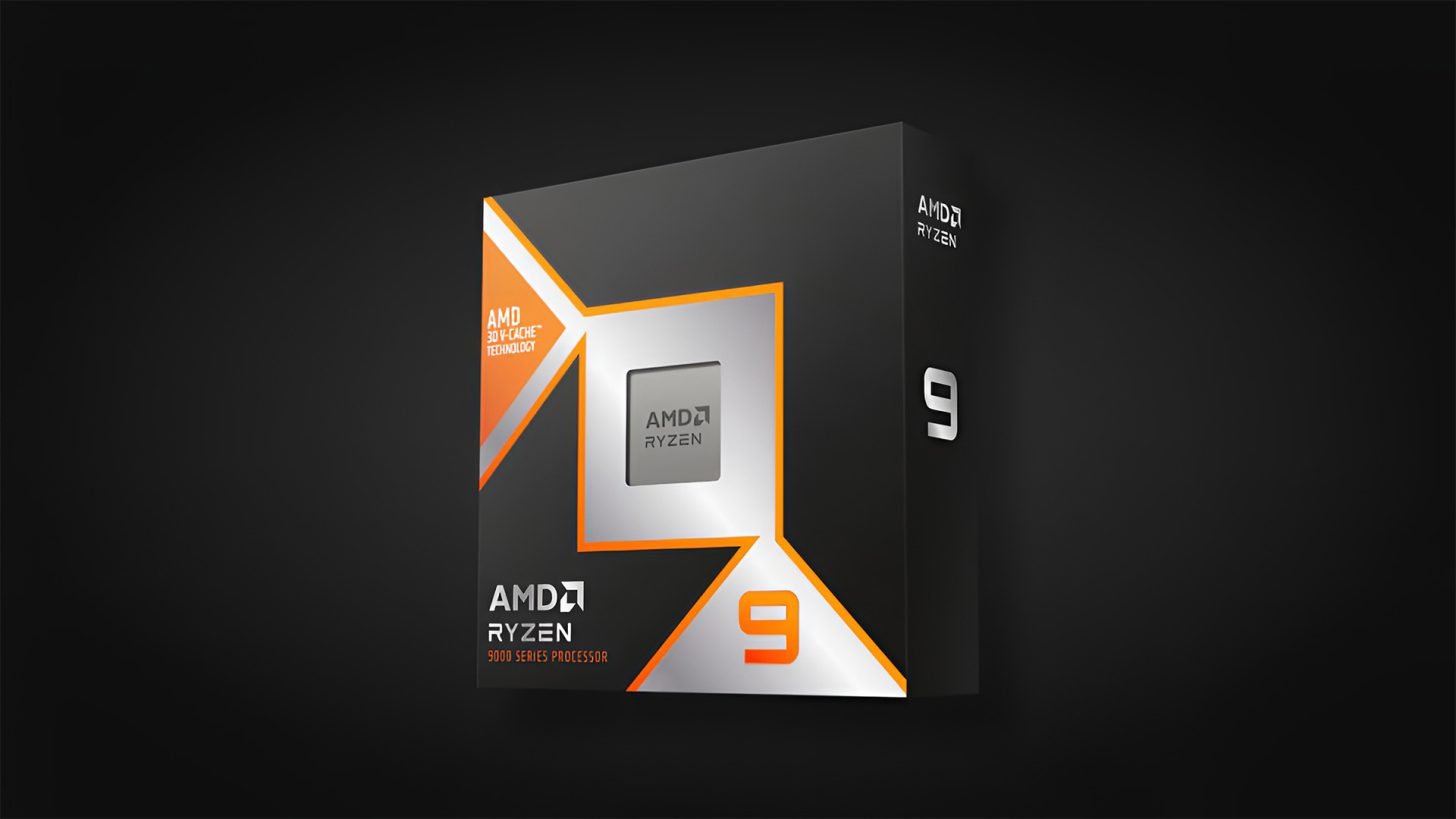
The high-performance enthusiast PC hardware market has witnessed intense competition in recent years, but few silicon releases have captured the dual demands of elite gaming and relentless productivity quite like AMD's Ryzen 9 9950X3D. Building directly on the momentum established by the celebrated Ryzen 7 9800X3D, this flagship processor bridges two traditionally opposing computing philosophies. For years, PC builders and system integrators had to make an agonizing trade-off: prioritize the massive single-core burst speeds and stacked cache architectures that drive competitive frame rates in modern titles, or opt for the towering multi-threaded throughput required by video editors, software engineers, 3D artists, and content creators. With the 9950X3D, AMD engineers set out to dismantle that compromise entirely.
At the center of the Ryzen 9 9950X3D is AMD's latest Zen 5 architecture paired with second-generation 3D V-Cache packaging. By placing 64 megabytes of high-density SRAM directly beneath the primary core complex die rather than atop it, AMD solved previous thermal dissipation bottlenecks that restrained clock speeds on prior generations. The resulting powerhouse boasts an astounding 16 cores, 32 execution threads, and a monstrous combined pool of 144 megabytes of L2 and L3 cache. In real-world gaming scenarios, those deep cache reserves insulate games from stuttering frame pacing and physics calculation bottlenecks, effortlessly feeding demanding rendering pipelines. Simultaneously, heavy computational tasks like compiling sprawling software codebases or exporting complex 4K animation files distribute smoothly across the full array of high-frequency Zen 5 cores without breaking a sweat.
While the technical merits of the processor have been praised by hardware reviewers since launch, the flagship tier has historically suffered from premium price anchoring. That dynamic has shifted dramatically with a major Amazon price reduction slicing an eye-catching $125 off the original manufacturer suggested retail price. For boutique system builders and do-it-yourself enthusiasts who held out during the initial launch cycle, this discount fundamentally redefines the platform's value equation. At its revised price point, the 9950X3D actively undercuts comparable high-end competing desktop processors from Intel, particularly when accounting for motherboard longevity and overall power efficiency under sustained multi-threaded loads.
Industry analysts point out that this timely price cut reflects broader shifts in the modern desktop component ecosystem. Memory vendors have rapidly stabilized DDR5 pricing, and motherboard manufacturers have matured their AM5 platform offerings with refined BIOS revisions that optimize X3D scheduling across varying Windows thread allocations. Retailers are seeing enthusiast interest spike as consumers prepare their rigs for the next generation of graphically demanding Unreal Engine 5 blockbusters and demanding local artificial intelligence workloads. Having a chip that handles heavy daily workstation routines while delivering peerless high-refresh-rate gaming gives the 9950X3D an undeniable edge in an increasingly price-conscious market.
Looking ahead, AMD's aggressive market positioning with the 9950X3D indicates a company confident in its hybrid cache methodology. As operating systems and game engines become increasingly adept at identifying cache-sensitive threads versus raw compute pipelines, the engineering legacy of this flagship will influence socket designs for years to come. For consumers ready to upgrade, this unexpected triple-digit Amazon discount provides the rarest of desktop hardware treats: genuine workstation superiority, benchmark-topping gaming headroom, and undeniable fiscal justification all wrapped in a single package.