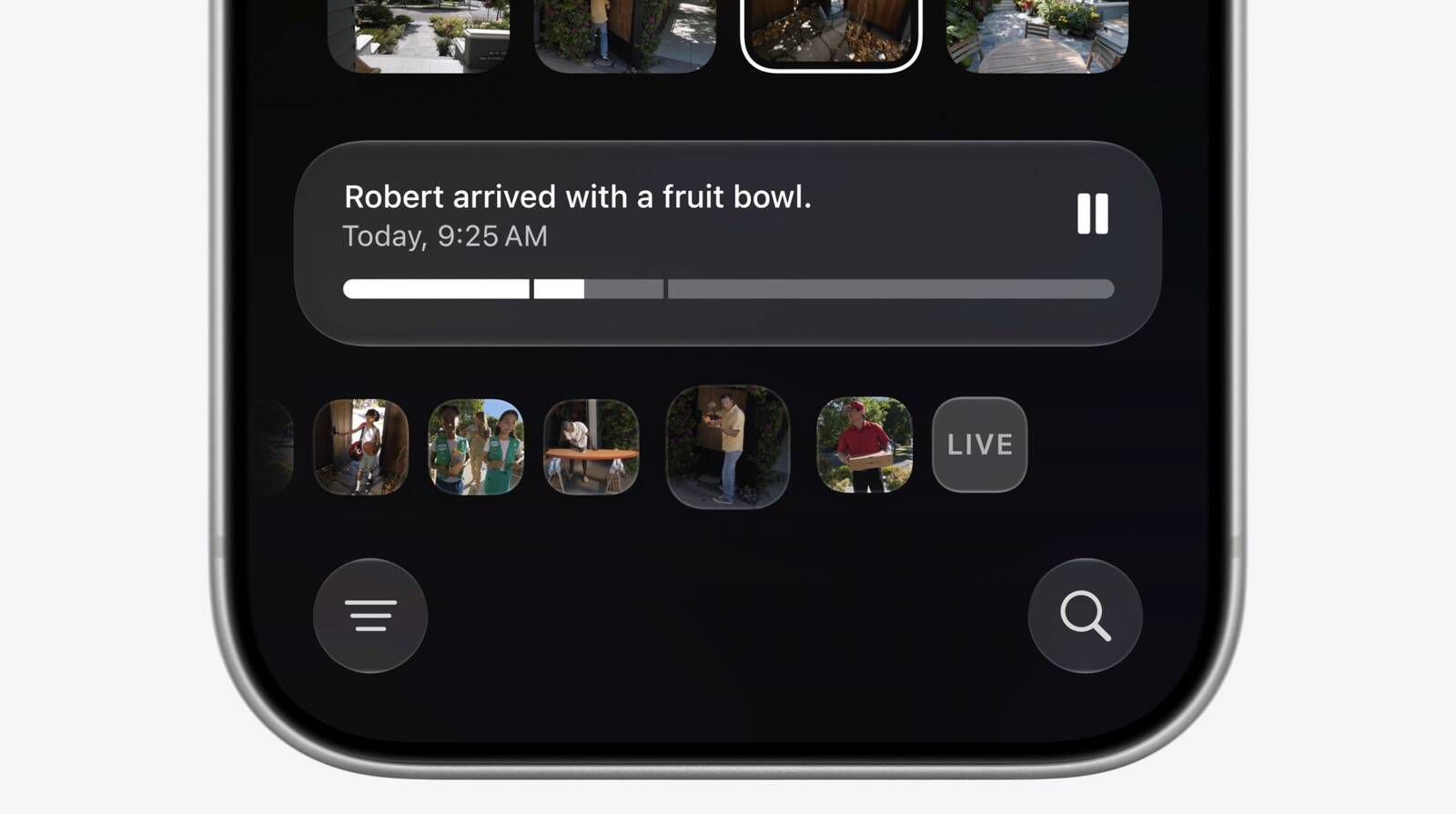
Apple has unveiled a major leap forward for its smart home ecosystem, announcing a suite of Apple Intelligence features coming directly to the Home app. The update promises to solve some of the most persistent annoyances of connected home monitoring by introducing advanced generative AI video descriptions for HomeKit Secure Video feeds alongside an intelligent notification grouping engine. The enhancements are designed to transform raw security footage and relentless pinging alerts into context-rich, human-readable summaries that make home automation feel truly intuitive.
Since its inception, HomeKit Secure Video has offered privacy-first recording, encrypting camera streams on local home hubs before safely backing them up to iCloud. While the system reliably identified generic categories such as people, pets, vehicles, and packages, its utility was often hampered by ambiguity. Users routinely received repetitive notifications alerting them that a person was detected, forcing them to manually open the app and review video timelines to decipher whether the alert was caused by a delivery courier, a family member returning home, or an unfamiliar visitor wandering across the lawn.
With the integration of Apple Intelligence, the Home app will now generate concise, natural-language descriptions of recorded clips directly on the user’s device and Apple Home hub. Instead of a generic alert, notifications will describe specific contextual events, such as noting that a courier in a blue uniform placed a package behind a porch planter, or that a family member walked the dog toward the driveway. By parsing movement, objects, and environmental context simultaneously, the system provides immediate actionable clarity without requiring homeowners to scrub through gigabytes of video footage.
Alongside intelligent clip descriptions, Apple is overhauling the notification architecture across the entire Home app. Smart notification grouping uses machine learning to synthesize multiple related events across different accessories into single, coherent summaries. If a backyard motion sensor activates, an exterior floodlight turns on, and a patio camera records movement within a tight window of time, the Home app consolidates these alerts into an intelligent event recap rather than flooding the user's lock screen with fragmented, disorienting notifications.
Privacy remains the central pillar of Apple’s smart home messaging. The company reiterated that all video parsing and language synthesis are processed locally on supported hardware like modern Apple TV and HomePod hubs, or routed through Apple’s Private Cloud Compute infrastructure when additional processing bandwidth is required. At no point is unencrypted video footage accessible to third parties or retained for machine learning training, preserving the strict privacy standards that differentiate Apple’s platform from competing cloud-based smart home ecosystems.
The update represents a pivotal evolution for Apple’s ambient computing strategy. As smart homes become increasingly saturated with sensors and cameras, managing information overload has become a critical challenge for consumers. By leveraging generative intelligence to filter noise and deliver meaningful insights, Apple is demonstrating how artificial intelligence can quietly and seamlessly improve the rhythm of everyday domestic life.