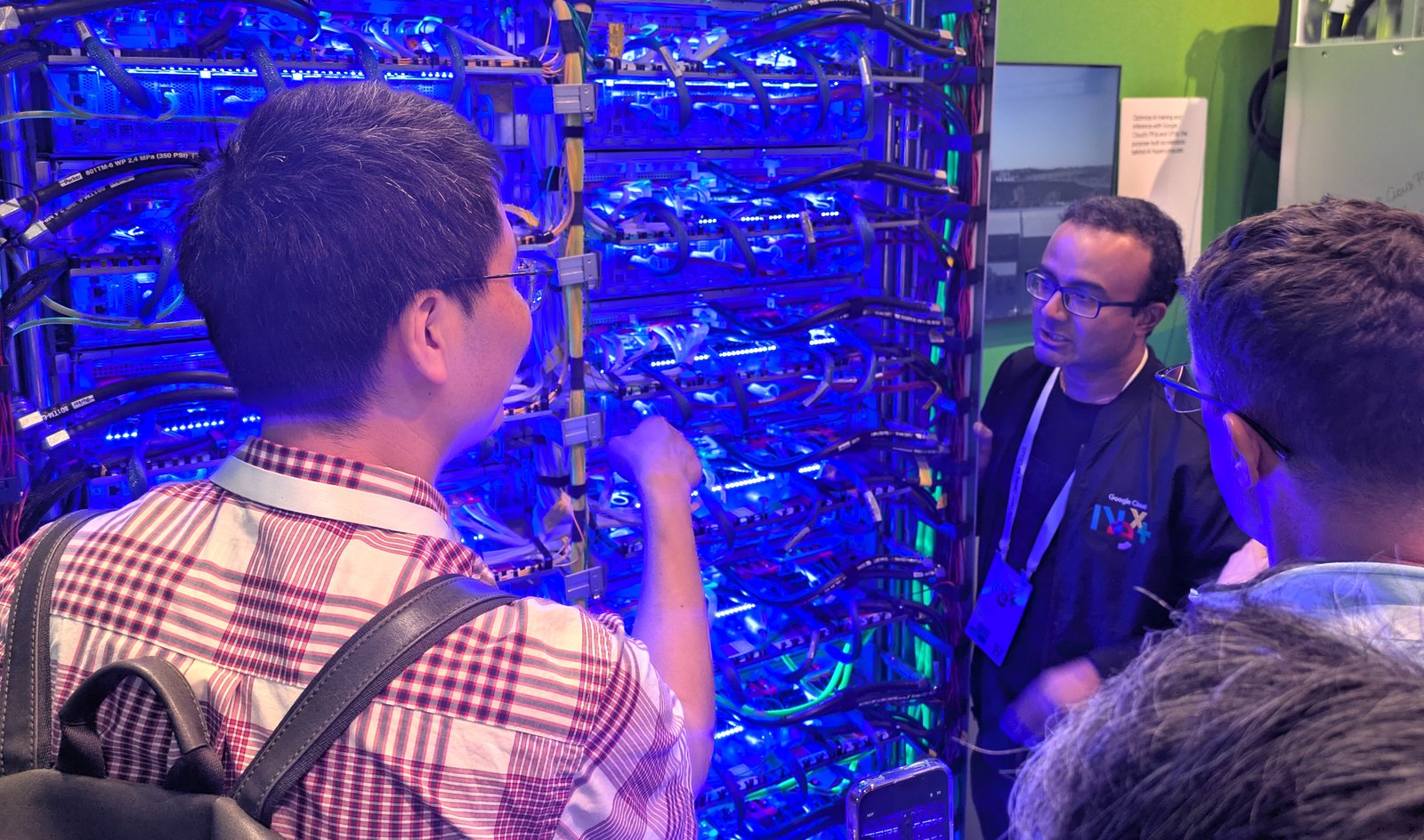
The accelerating race to build, train, and deploy foundational artificial intelligence models has triggered an unprecedented re-engineering of modern enterprise data centers. No single corporate alliance illustrates this seismic architectural transformation quite like the sprawling partnership between Nvidia and Google Cloud. Unveiled in granular detail during Google's annual Cloud Next gathering, the two tech behemoths have woven their respective silicon and software ecosystems into a cohesive, vertically integrated superstack. Known colloquially throughout the enterprise computing sector as an end-to-end artificial intelligence factory, this infrastructure is engineered to solve the immense compute and data ingestion bottlenecks threatening next-generation software development.
At the silicon bedrock of this superstack lies Nvidia's formidable Blackwell computing platform, featuring high-bandwidth B200 and GB200 NVL72 liquid-cooled rack architectures. Rather than treating these silicon clusters as disparate clusters of graphics processors, the architecture connects dozens of computational cores across high-density NVLink interconnects and Quantum-X800 InfiniBand switches, effectively functioning as a single, colossal graphics-processing engine. Google Cloud has intricately integrated this hardware layer with its own custom-built titanium networking cards and hyper-scalable storage topologies, ensuring that the terabytes of raw training data fed into frontier models can circulate continuously without generating computational latency or memory choke points.
Yet the true technological achievement of the Nvidia-Google superstack extends far beyond raw physical hardware into the software orchestration layer. Modern machine learning workloads frequently suffer from cluster instability, where a single node failure across thousands of networked processors can corrupt an entire multi-week training cycle. To counteract this, Google Cloud has deeply embedded Nvidia's specialized NIM microservices, CUDA-X computational libraries, and NeMo framework into Google Kubernetes Engine. This co-engineered software framework automates dynamic workload rebalancing, fault-tolerant model checkpointing, and real-time inference optimization, allowing enterprise engineers to scale massive parameter networks with enterprise-grade reliability.
For enterprise enterprises and venture-backed research laboratories, the implications of this tightly coupled superstack are transformative. Building sovereign compute infrastructure capable of training multi-modal reasoning models requires tens of millions of dollars in capital expenditure and specialized electrical engineering expertise that few individual companies possess. By accessing this joint architecture through a managed cloud model, organizations in drug discovery, autonomous robotics, quantitative finance, and natural language synthesis can deploy enterprise-grade training clusters on demand, radically compressing the time required to bring frontier products from theoretical papers to market deployment.
Looking to the future, the Nvidia-Google Cloud alliance establishes a new blueprint for how hyper-scale cloud providers must collaborate with semiconductor pioneers. As model parameters inevitably push toward the multi-trillion mark, the era of treating compute components as modular, off-the-shelf commodities has ended. The future of enterprise intelligence belongs to these unified, hyper-dense computing factories, where silicon, networking, cooling, and software orchestration are designed in lockstep to power the next intellectual frontier.