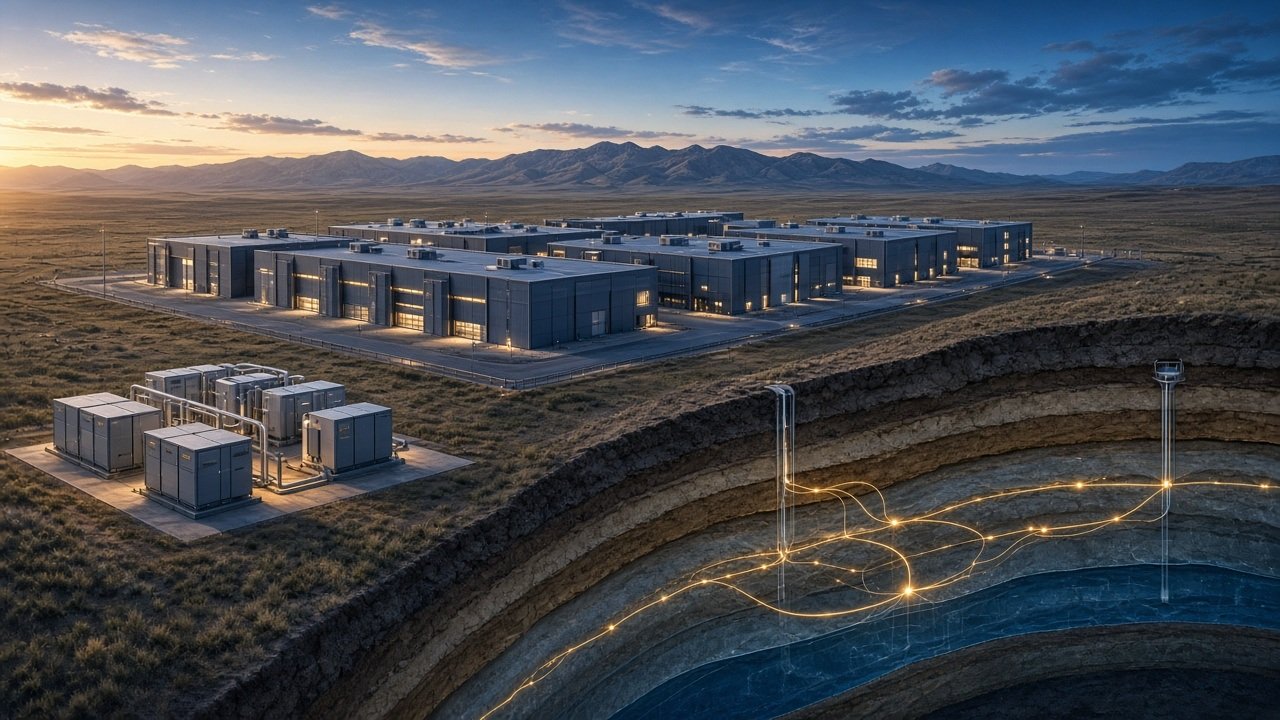
Google’s next big infrastructure bet comes with a question that reaches well beyond computing: can an enormous data center expand without overwhelming the community around it? The company has announced a long-term $17 billion investment in its first Wyoming data center, tying the project to an unusual power arrangement, reduced water use and promises to cover infrastructure costs directly associated with its growth.
What Google has actually announced
In its November 5 announcement, Google said the project would be developed in partnership with Tallgrass Energy, Black Hills Energy, American Electric Power and Related Digital. The company presented the investment as a long-term commitment to Laramie County, rather than saying the full sum had already been spent or that the facility was operating.
The distinction is important when reading a headline-sized investment number. Google is announcing an infrastructure program and its intended benefits, not reporting completed construction or verified operating results. Its statement also sets out what the community should be able to ask about later: energy provision, water consumption, local taxes, training and the cost of supporting the development.
Fuel cells and carbon capture are central to the plan
Google says its contract with American Electric Power includes a commercial-scale, 702-megawatt fuel-cell development with carbon capture and storage. The planned fuel cells, made by Bloom Energy, would convert natural gas into electricity through an electrochemical reaction. This is not an announcement that the data center will run entirely on renewable electricity or that natural gas use produces no emissions.
The company says the carbon-capture system would capture a large majority of the development’s carbon emissions for permanent geological storage at Tallgrass’s nearby Eastern Wyoming Sequestration Hub. It also plans to source electricity from gas generators operated by Tallgrass and Black Hills Energy. A separate engineering study will evaluate fitting Tallgrass’s combined-cycle turbines with carbon-capture technology. A study is not the same as completed installation, and planned capture performance remains a commitment to be demonstrated.
Why the water commitment matters locally
Google says the data center will be air-cooled to minimize pressure on local water resources. That is a specific design choice, but it should not be translated into a claim that the entire project has no water footprint. The company’s announcement describes efforts to reduce water use and support replenishment, not a promise that every associated activity will be water-free.
Local reporting by WyoFile explains why that distinction matters. The outlet described water consumption as a major concern among Wyoming residents and reported a University of Wyoming poll in which only 30% supported allowing more large AI data centers. The same story placed Google’s plans in a Cheyenne-area market with 10 operating data centers and more than a dozen in planning.
A local economic offer meets wider skepticism
Google expects the project to generate hundreds of millions of dollars in local property taxes for Laramie County and School District 1. It also describes education, entrepreneurship and skilled-trades initiatives. These are company expectations and proposed community investments, not independently established tax receipts or completed employment outcomes. Their eventual timing will matter alongside the headline value of the investment.
The company said it had met more than 200 residents at a downtown Cheyenne community meeting. It and its partners are also establishing a Community Council to address the effects of data-center growth. WyoFile reported that Cheyenne Mayor Patrick Collins had been speaking with Google for at least a year and regarded the announcement as confirmation that the project was moving ahead. Local support and local concern therefore exist side by side; neither should be treated as the whole community’s view.
The next test is delivery, not the announcement
One of Google’s most consequential pledges is that it will pay for all the power it uses and cover infrastructure needs directly driven by its growth. For residents, that creates a practical benchmark: whether the investment’s costs and benefits are allocated in the way the company describes. Electricity supply, water management and community engagement are separate issues, so progress on one does not automatically resolve the others.
The Wyoming project shows the increasingly physical nature of the AI expansion. More computing capacity requires buildings, energy systems and durable local agreements, not simply faster software. Google has outlined a detailed approach, but the difference between a persuasive announcement and a successful development will be visible in construction, operating performance and community outcomes. Those are the measures that will determine whether the $17 billion promise earns lasting local confidence.