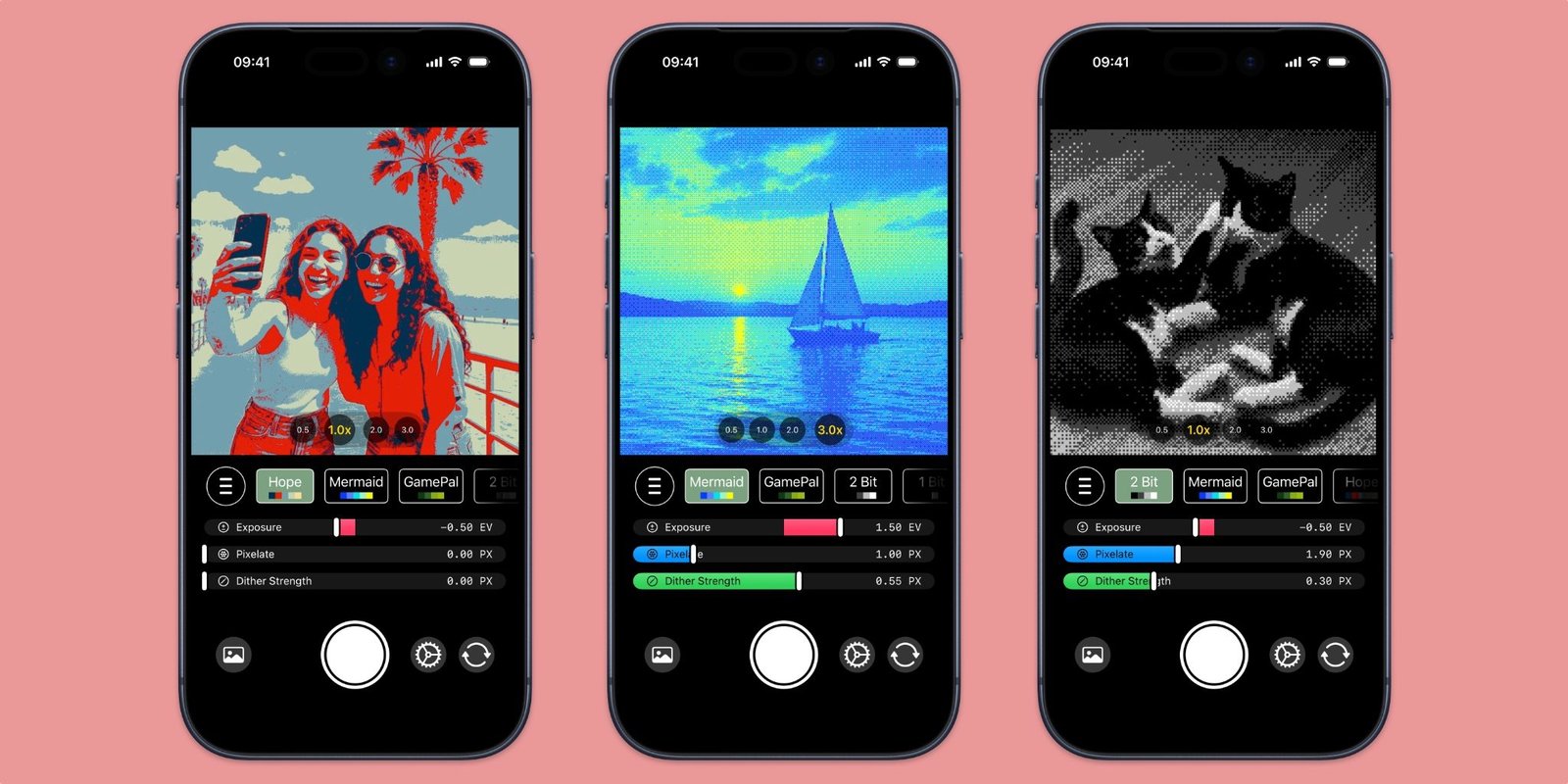
In an era dominated by hyper-polished smartphone cameras and algorithmic image processing that smooths away every imperfection, a rebellious counter-trend is sweeping mobile photography. Modern mobile users, particularly Gen Z digital creators, are increasingly rejecting clinical HDR sharpness in favor of lo-fi textures, crunchy dithered visuals, and the nostalgic warmth of 1990s handheld consoles. At the center of this aesthetic movement is NeoCam, an inventive indie iOS application that transforms the iPhone’s advanced camera system into a vintage gaming viewfinder. Instead of capturing standard high-resolution stills, NeoCam renders the world through authentic 8-bit and 16-bit color palettes, evoking the pixelated magic of the original Game Boy, classic arcade machines, and early digital point-and-shoots.
What distinguishes NeoCam from conventional filter apps is its sophisticated technical execution under the hood. Developed by solo software engineer and retro-gaming enthusiast Julian Reed, the application bypasses generic photo overlay templates entirely. Instead, NeoCam utilizes a custom graphics pipeline built directly on Apple’s Metal framework, executing real-time fragment shaders on the live camera feed at a seamless sixty frames per second. The app downsamples incoming sensor data and routes it through authentic spatial dithering algorithms, including classic Bayer matrix ordered dithering and error-diffusion Floyd-Steinberg routines. Users can dynamically toggle between iconic monochrome pea-soup green screens, vibrant 16-color Sega Genesis palettes, and CRT monitor scanlines, watching their everyday surroundings instantly digitize into animated pixel-art tapestries.
Reed began coding NeoCam as a weekend passion project after growing disillusioned with the homogenizing effect of modern computational photography. He observed that while contemporary smartphones capture technically flawless images, they often strip away atmosphere, mood, and artistic distinction. Drawing inspiration from vintage gaming hardware constraints, Reed spent months researching original display driver schematics to ensure color-quantization values matched historical color profiles with mathematical accuracy. When early video previews of NeoCam hit TikTok and Instagram, the app exploded virally overnight. Young photographers embraced the aesthetic as a distinctive form of visual storytelling, using NeoCam to shoot gritty urban streetscapes, live music concerts, and stylized portraits that instantly stand out in crowded social feeds.
The viral triumph of NeoCam speaks to a broader cultural yearning for deliberate technological imperfection. Much like the contemporary resurgence of vinyl records, cassette tapes, and vintage Digicams, pixel-art photography offers an intentional rejection of sterile digital efficiency. For younger demographics who grew up in an ecosystem saturated with hyper-realistic computational visuals, retro aesthetics provide an appealing layer of tactility, mystery, and nostalgic charm, even if they never experienced the 8-bit era firsthand. By constraining resolution and color depth, NeoCam paradoxically liberates photographic creativity, forcing shooters to focus on strong compositions, dramatic lighting contrasts, and silhouette forms rather than microscopic image clarity.
As NeoCam continues to climb the App Store charts, Reed is actively expanding the platform with interactive features, including custom palette editors, chip-tune audio recording integration, and animated GIF exporting capabilities. The indie app stands as an inspiring testament to how solitary developers can challenge mainstream software conventions and tap into cultural undercurrents. In proving that lower resolution can often evoke deeper emotional resonance, NeoCam reminds us that in visual art, perfection is rarely the goal; sometimes, viewing our modern world through the nostalgic prism of twenty-four pixels is exactly what makes photography exciting again.