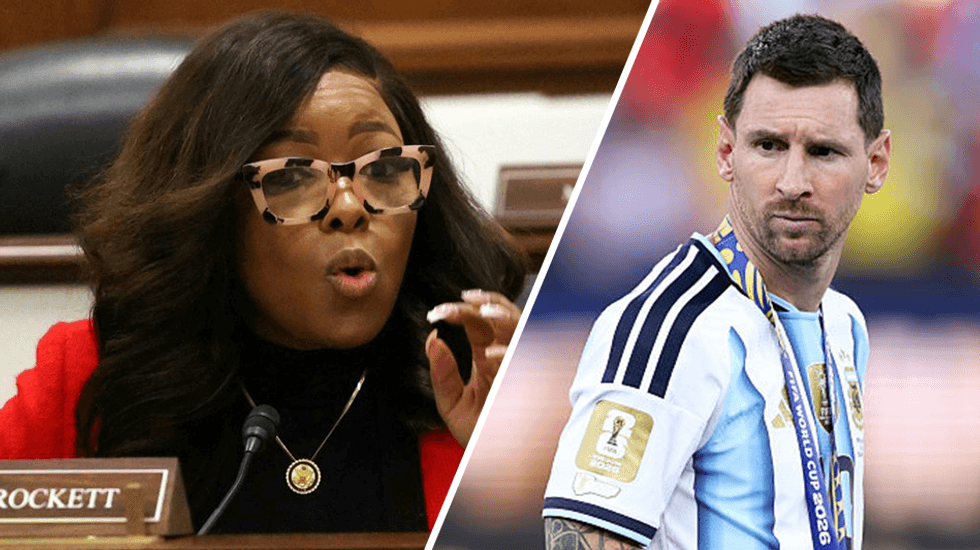
The often fraught intersection of partisan American politics and global sporting culture collided in spectacular fashion when Democratic Representative Jasmine Crockett of Texas sparked an intense international uproar during a congressional hearing. Speaking during a House Oversight subcommittee proceeding ostensibly dedicated to reviewing the operations of the Smithsonian Institution, Crockett steered the questioning into the arena of international soccer, specifically referencing the impassioned global fandom surrounding the FIFA World Cup final. Crockett suggested that the vast majority of international spectators who rallied behind European powerhouse Spain over Argentina did so because of what she characterized as Argentina’s entrenched historical legacy of systemic racism. The controversial remarks ignited instant social media fury, polarizing commentary, and a fierce debate over the racial politics of global sports.
The contentious exchange occurred when Crockett questioned prominent historian David Blight, pressing him to explain why global viewers appeared overwhelmingly aligned against the South American football power during championship showdowns. When Blight offered the conventional athletic explanation—reasoning that spectators supported Spain simply because they favored the squad’s technical mastery and style of play—Crockett forcefully dismissed his assessment. She asserted instead that anti-Argentina sentiment around the world was rooted in the nation's historical treatment of Black populations and racial demographics. The Texas lawmaker’s assertion quickly mirrored viral internet discourse that had previously circulated on social media platforms, where cultural commentators and celebrities had debated Argentina’s unique Afro-descendant history following their historic international soccer triumphs.
The reaction across the political spectrum and global sports landscape was swift, vociferous, and overwhelmingly divisive. Conservative commentators and political opponents seized on Crockett’s remarks as an egregious example of American political figures attempting to project domestic culture-war frameworks onto foreign societies and apolitical sports events. Social media erupted with mocking commentary from soccer enthusiasts worldwide, who pointed out that millions of fans across Asia, Latin America, Africa, and the Middle East passionately cheered for Argentina purely out of profound reverence for legendary captain Lionel Messi and the team’s breathtaking athletic brilliance. Critics argued that reducing universal athletic admiration or team rivalry to sweeping racial accusations was irresponsible, historically flawed, and needlessly inflammatory.
Conversely, some progressive academics and cultural commentators defended Crockett for highlighting an uncomfortable historical reality that global soccer authorities often avoid discussing. In recent years, international soccer has been shaken by recurring racial controversies, including offensive locker-room celebration chants by Argentine national team players that mocked the African heritage of several French national team stars. Scholars pointed out that Argentina’s historical demographic shifts and national narratives regarding race have long been the subject of legitimate academic study and criticism across Latin America. Proponents contended that Crockett was calling attention to a genuine cultural conversation regarding representation, diversity, and historical erasure in high-profile international sporting competitions.
The explosive controversy surrounding Crockett’s remarks underscores the turbulent reality of modern public discourse, where sports, national identity, and ideological polarization are increasingly inseparable. In an interconnected digital age, local congressional hearings can instantly trigger geopolitical debates across international fanbases in Buenos Aires, Madrid, and beyond. While global athletic tournaments like the World Cup are traditionally celebrated as unifying spectacles that transcend borders, Crockett’s comments demonstrate how swiftly the universal joy of sport can be drawn into the polarizing vortex of contemporary political combat.