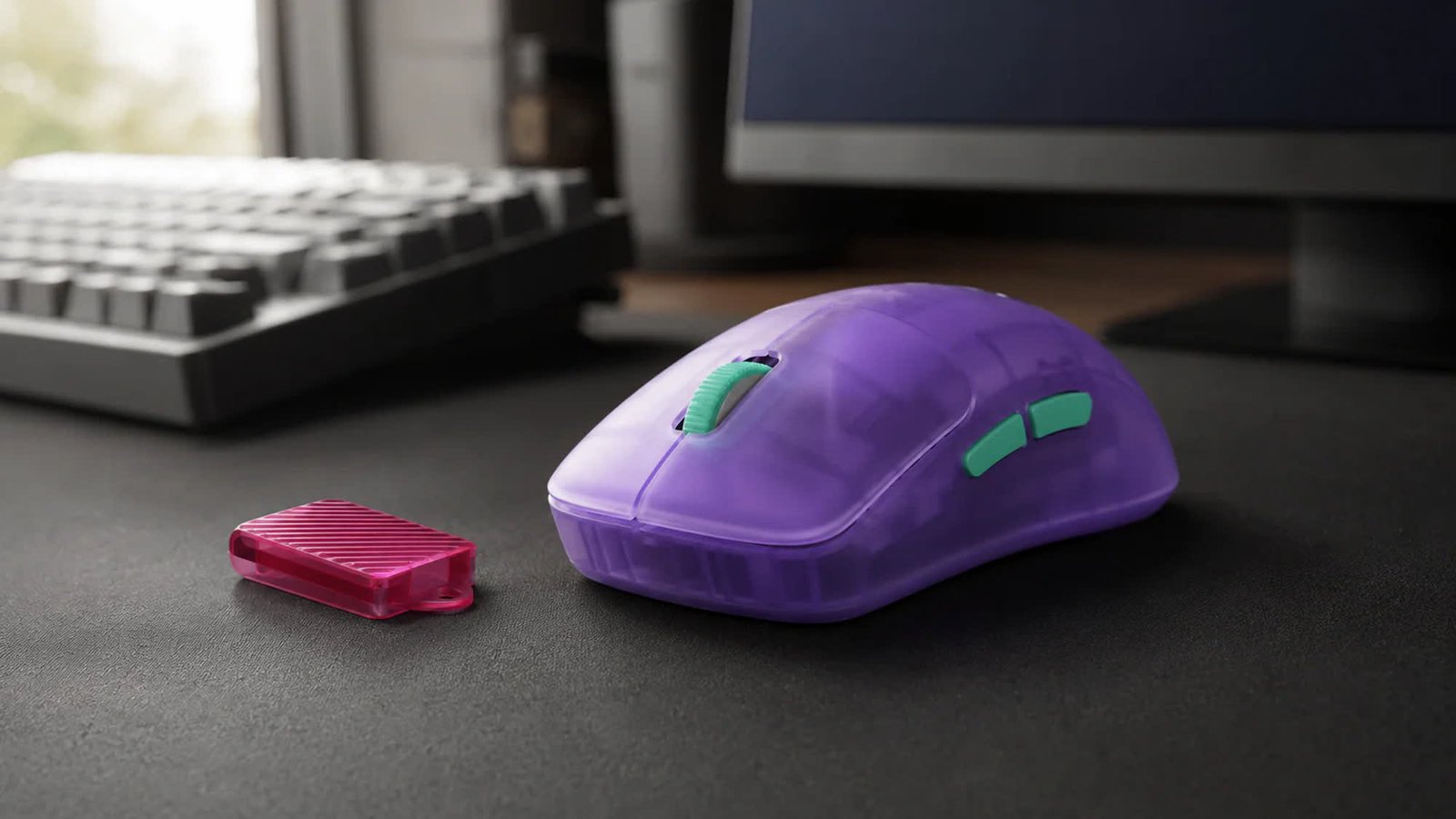
For decades, competitive gaming peripherals have operated in a walled garden of proprietary software and locked hardware controllers. While enthusiasts in the mechanical keyboard community have long embraced open-source firmware solutions like QMK, VIA, and ZMK to customize actuation profiles, remap layers, and inspect raw code, the gaming mouse market has remained firmly insulated. Sensors, tracking algorithms, polling routines, and click latency optimizations continue to be tightly sealed behind black-box manufacturer code. Peripheral specialist Keychron is now challenging this longstanding paradigm by announcing plans to introduce fully open-source firmware across its burgeoning lineup of performance gaming mice.
Keychron’s initiative represents a potential watershed moment for hardware enthusiasts, competitive esports players, and transparency advocates alike. In today’s competitive landscape, mice manufacturers often boast about astronomical polling rates reaching 4,000Hz or 8,000Hz, sub-millisecond click latencies, and ultra-precise optical sensors. Yet gamers have little choice but to install bloated, resource-heavy desktop utility suites simply to adjust DPI steps, alter lift-off distance, or update device firmware. In worst-case scenarios, these proprietary software bundles consume background CPU cycles, trigger anti-cheat false positives, or collect telemetry without clear justification, creating significant frustration among purists.
By bringing an open-source firmware stack to gaming mice, Keychron aims to grant users unprecedented control over how their hardware behaves at the microcontroller level. Players will theoretically be able to audit the sensor smoothing algorithms, customize motion-sync behavior, tailor debouncing filters, and adjust power-saving sleep timeouts directly in code or via lightweight web-based configurators like WebHID. This degree of transparency eliminates reliance on persistent background applications, ensuring that custom configurations are baked directly into onboard memory without external software interference during critical tournament play.
Industry reactions to Keychron’s announcement have been a mixture of palpable excitement and technical curiosity. Embedded software developers praise the democratization of mouse firmware, noting that open-source code could accelerate innovations in battery optimization, motion smoothing, and ultra-high polling stability. When an entire global community of firmware tinkerers can inspect and refine how sensor interrupts are processed, edge-case bugs and tracking anomalies can be diagnosed and patched far more quickly than internal corporate engineering teams could manage alone.
However, the move is not without substantial hurdles. Modern gaming mice rely heavily on tightly integrated sensor-MCU combinations, frequently governed by non-disclosure agreements from semiconductor manufacturers such as PixArt or Nordic Semiconductor. Keychron will need to navigate licensing restrictions to open up register-level configurations without violating intellectual property protections. Furthermore, esports tournament organizers and anti-cheat software developers may scrutinize open-source mouse firmware closely to prevent malicious users from injecting undetectable hardware macros, rapid-fire triggers, or recoil compensation scripts at the firmware layer.
Despite these engineering and regulatory challenges, Keychron’s bold push into open-source peripherals signals a welcome shift toward consumer ownership and hardware longevity. If successful, it could trigger a broader industry trend, compelling mainstream peripheral giants to reconsider their proprietary lock-in models. In an era where gamers increasingly demand performance, repairability, and privacy, transparent mouse firmware could elevate competitive hardware from disposable consumer electronics into modular, long-lasting performance instruments.