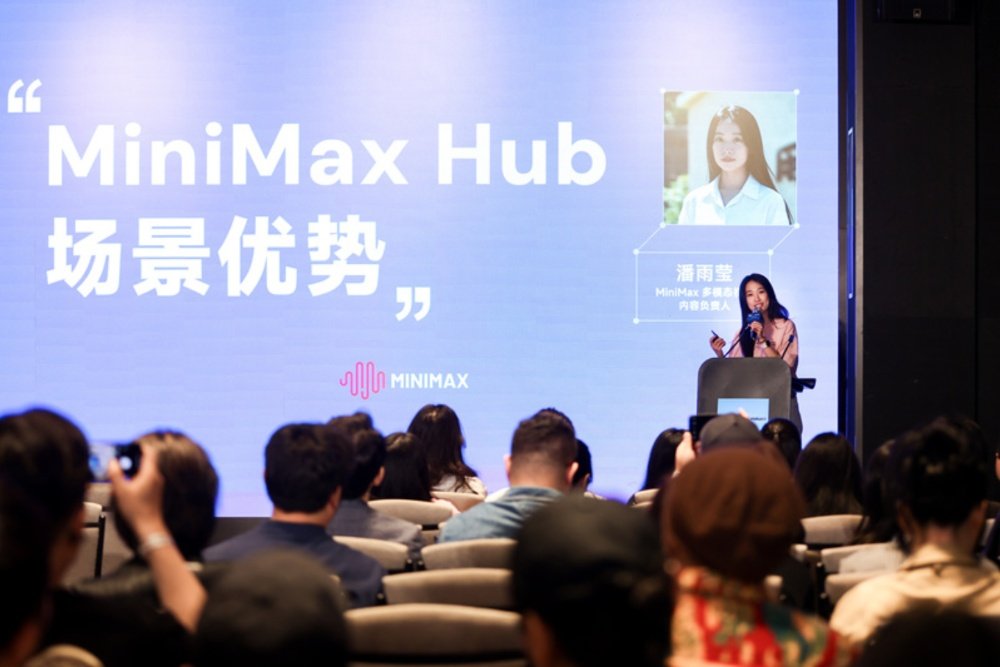
The intersection of artificial intelligence and cinematic storytelling reached a watershed moment at the prestigious Shanghai International Film Festival, as Chinese technology powerhouse MiniMax officially unveiled its all-in-one AI video generator hub. Named simply Hub, the multimodal creative suite represents one of the most ambitious consolidations of generative technology to date, merging text-to-image synthesis, hyper-realistic video generation, automated voiceover narration, atmospheric musical composition, and non-linear timeline editing into a single unified platform. Yet, amidst the dazzling technical demonstrations that stunned attendees, it was the philosophical stance articulated by the company’s leadership that resonated most deeply throughout the auditorium.
Addressing an audience comprised of veteran film directors, cinematographers, and software engineers, Xu Lüyang from MiniMax’s product operations department struck a remarkably grounded and reverent tone toward traditional filmmaking. In an era where AI executives often boast of rendering human creators obsolete, Xu delivered a clear, unhedged counter-narrative: creative direction and aesthetic judgment must ultimately be left to humans. MiniMax’s leadership emphasized that while generative algorithms can synthesize photorealistic visual frames, calculate complex lighting physics, and score emotional harmonic chords in seconds, the software fundamentally lacks the lived emotional experience, philosophical nuance, and cultural intuition that define timeless cinematic art.
Hub arrives at a time of fierce global competition in the generative video domain. With Western juggernauts like OpenAI’s Sora and Runway’s Gen-3 capturing headlines alongside domestic rivals such as Kuaishou’s Kling, the race to develop the definitive AI production pipeline has accelerated at breakneck speed. What distinguishes MiniMax’s Hub from its contemporaries is its deliberate transition away from isolated prompt experimentation toward end-to-end workflow coherence. Rather than forcing creators to generate disjointed five-second video clips in one application, export them to a third-party audio synthesizer, and assemble them inside a traditional editing suite, Hub synchronizes all creative parameters within a single workspace, preserving character consistency, camera movement, and audio-visual synchronization across scenes.
The reaction from the filmmaking community at the Shanghai festival was a fascinating mixture of cautious excitement and technical curiosity. Independent filmmakers and boutique production houses highlighted the immense democratization potential inherent in Hub’s architecture. Visual effects sequences, elaborate period set designs, and speculative concept reels that once required multi-million-dollar budgets and months of post-production labor can now be visualized and prototyped in hours by small indie teams. Directors praised the software’s intuitive timeline controls, which allow creators to steer camera focal lengths, alter lighting angles, and adjust character blocking without starting the entire generative process from scratch.
Ultimately, MiniMax’s unveiling of Hub reflects an industry maturing past the era of sensationalist novelty and confronting the realities of professional adoption. By explicitly framing its technology as an amplifier for human imagination rather than an autonomous replacement for the artist, MiniMax has positioned itself as an ally to the creative community. As the lines between synthetic generation and traditional filmmaking continue to blur, platforms like Hub indicate that the future of cinema will not be dictated by algorithmic autonomy, but by the visionary humans who command the tools with intention, taste, and emotional truth.