
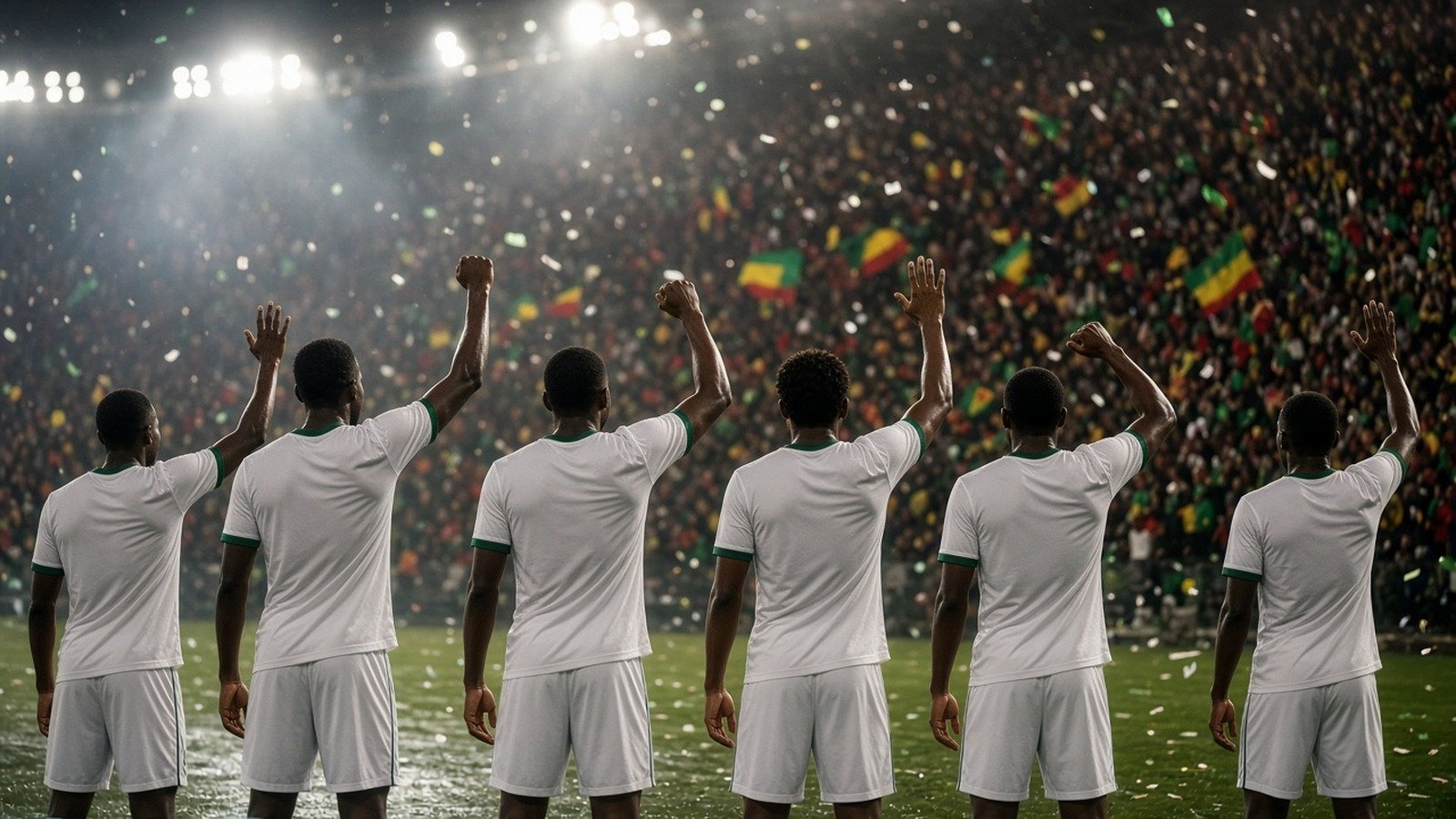
Ten months after a chaotic night in Rabat, sport's highest court has handed the Africa Cup of Nations trophy back to the team that won it on the pitch.
Senegal have been reinstated as champions of the 2025 Africa Cup of Nations after the Court of Arbitration for Sport (CAS) upheld their appeal on Tuesday, 24 November. The unanimous ruling sets aside a Confederation of African Football (CAF) appeals decision from March that had declared Senegal forfeited the final and awarded the title to hosts Morocco. The original result, a 1-0 extra-time win for Senegal in the final played on 18 January, now stands, according to the CAS media release.
CAF has already said it respects the award and will take the steps needed to put it into effect. Morocco's federation, however, has signalled the fight may not be over.
What CAS decided
The case turned on a long-standing legal principle known as the "field of play" doctrine, under which CAS generally declines to second-guess decisions referees make during a match unless the rules were applied arbitrarily or in bad faith.
The Senegalese Football Federation (FSF) argued that referee Jean-Jacques Ndala's decision to restart the final, deep into second-half stoppage time, and let it finish with a sporting result could not be reviewed. The Royal Moroccan Football Federation (FRMF) countered that the doctrine did not cover the disciplinary consequences of Senegal leaving the pitch, and that the referee should have ended the match early under Articles 82 and 84 of the tournament regulations.
The three-member panel sided with Senegal. In its summary, CAS said the choice to resume or stop the match "fell definitively within his sole authority", and that by blowing his whistle the referee judged the conditions for restarting had been met, with both teams back on the pitch and willing to continue. The panel found the two articles Morocco relied on apply only when a team's conduct causes a referee to call a game off permanently, which did not happen here. It also acknowledged the "extreme tension" Ndala faced but rejected the claim that his decision was arbitrary.
CAS added that the FSF, coach Pape Thiaw and some players had already been punished by CAF in separate disciplinary proceedings. Under the ruling, the decision of CAF's Disciplinary Board of 11 February is reinstated, while the Appeal Board decision of 17 March is cancelled, CAF confirmed in a statement.
How the final descended into chaos
The final at the Prince Moulay Abdellah Stadium was goalless as it entered second-half stoppage time, when two flashpoints followed in quick succession. According to BBC Sport, Ndala first ruled out an apparent Senegal goal by blowing for a foul on Achraf Hakimi just before Ismaila Sarr headed in. Minutes later, after a VAR review, he gave Morocco a penalty for a pull by El Hadji Malick Diouf on Brahim Diaz.
Thiaw called his players to the touchline and then went down the tunnel in protest, with several players following him. By the time they returned and the spot-kick was taken, more than 15 minutes had passed. Diaz tried a Panenka-style penalty, and Edouard Mendy saved it easily. Pape Gueye then scored the only goal in extra time.
Senegal lifted what was their second continental title, but the FRMF challenged the result. CAF's Disciplinary Board rejected Morocco's complaint, before the Appeal Board reversed course in March, ruling that Senegal had forfeited and recording a 3-0 win for Morocco. The FSF called that decision "unfair, unprecedented and unacceptable" and took it to Lausanne, where the panel held a closed-door hearing on 8 October.
Reactions from Dakar and Rabat
The FSF welcomed the ruling "with deep satisfaction", saying it confirmed that a match's true outcome is decided on the pitch. Its first response on social media was a photo of the squad lifting the trophy in January, captioned "again and always champions of Africa", BBC Sport reported.
Morocco's federation said it was surprised by the verdict and would "pursue all available legal avenues" to challenge it. Even before the ruling was announced, the FRMF had raised concerns about the process. It alleged that Ulrich Haas, the arbitrator nominated by Senegal, had a phone call with FSF president Abdoulaye Fall on the Sunday before the decision. Fall "categorically" denies that any such call happened, and no finding has been made on the claim.
Could there be another twist?
A CAS award is the end of the line within sport's own system, but it is not untouchable. As BBC Sport notes, Morocco could ask the Swiss Federal Tribunal to set the ruling aside. If that succeeded, the case would most likely go back to CAS before a new panel.
There is a precedent. Chinese swimmer Sun Yang successfully challenged his eight-year doping ban at the Swiss court, and a rehearing at CAS cut it to four years and three months.
CAS will publish its full reasoning in due course unless the parties ask for confidentiality.
A final that has already changed football's rules
In April, football's lawmaking body IFAB introduced a rule letting referees show a red card to any player who leaves the field in protest at a decision. The rule also covers team officials who encourage players to walk off, and a team whose actions cause a match to be abandoned will, in principle, forfeit it.
For Morocco, the ruling caps an awkward year off the pitch for a country that is fast becoming a hub for African football. DW points out that the long dispute overshadowed an otherwise well-organised tournament for the 2030 World Cup co-host, which is now officially the runner-up.
Both nations have changed coach since January, and both have already qualified for AFCON 2027 with two rounds of qualifying still to play. After ten months of hearings and appeals, Senegal can once again call themselves champions of Africa, though Morocco's response will decide whether this is truly the last word.