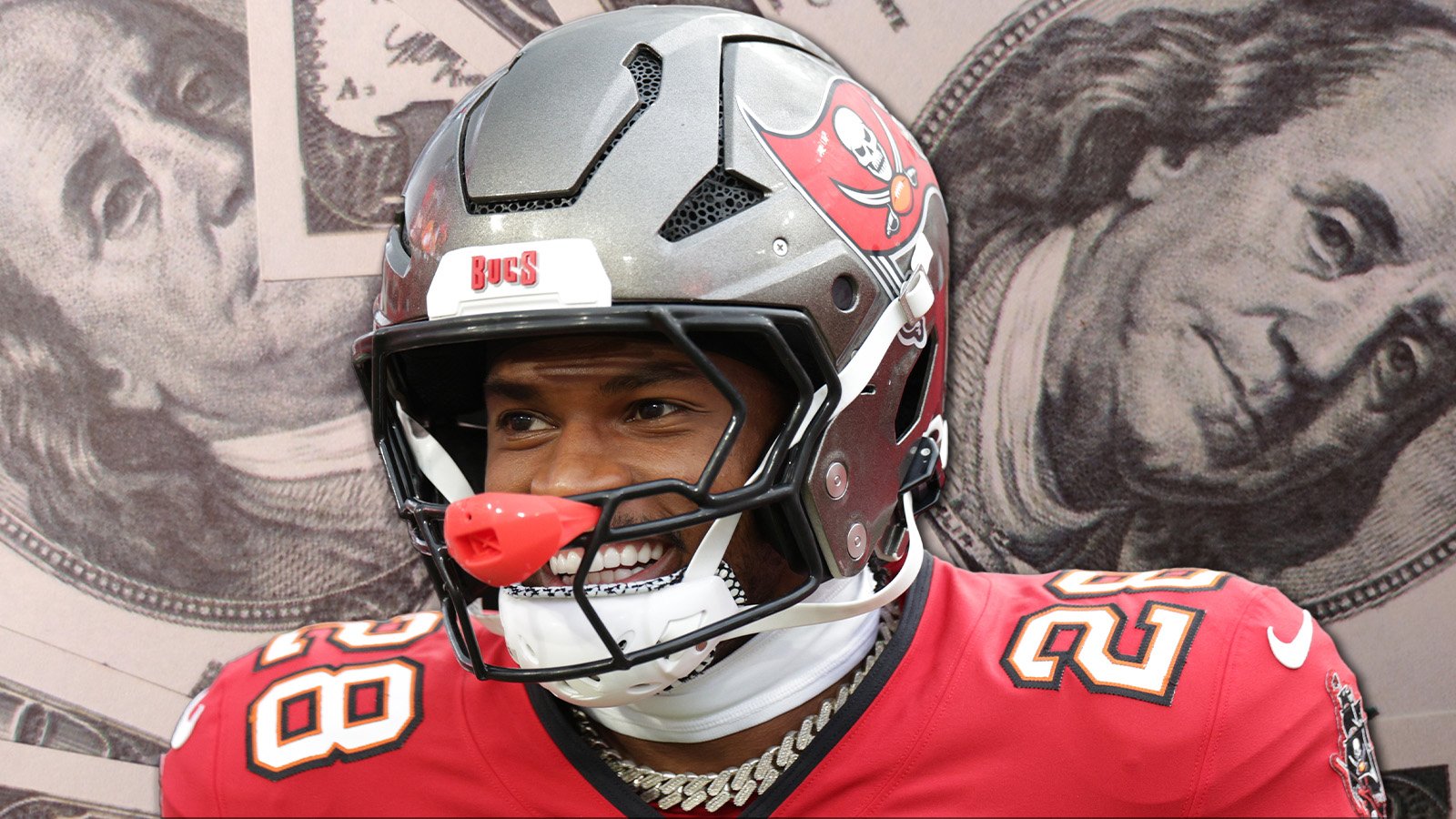
The transition from collegiate athletics to professional football is often portrayed as a seamless march toward generational wealth, yet the reality behind the scenes can be far more precarious. Shilo Sanders, the outspoken Colorado safety and son of Pro Football Hall of Famer Deion Sanders, found himself at the center of sports headlines after candidly addressing why he remains on the outside of the National Football League looking in. Despite generating significant buzz and initially signing what appeared to be an enviable rookie contract with the Tampa Bay Buccaneers, Sanders did not secure a coveted spot on the active fifty-three-man regular season roster. More crucially, the defensive back revealed that the actual compensation he received fell drastically short of the headline dollar figure trumpeted across social media during the offseason.
Speaking openly on digital platforms, Sanders pulled back the curtain on the harsh mechanics governing modern NFL player contracts. While sports media frequently broadcasts the maximum potential value of an agreement, non-guaranteed money, camp stipends, and contingent roster bonuses frequently evaporate the moment a player fails to survive final cuts. Sanders explained that although the Buccaneers brass presented an enticing framework, his release prior to Week One meant that only an incremental fraction of that figure ever reached his bank account. For an athlete whose collegiate career under his father’s spotlight was marked by immense visibility and commercial branding, confronting the cold operational calculus of front-office salary caps proved to be an eye-opening professional lesson.
The Buccaneers faced difficult roster decisions across their secondary heading into the campaign, prioritizing scheme versatility, special teams endurance, and established veterans on team-friendly deals. While Sanders showcased flashes of the aggressive physicality and field vision that defined his tenures at South Carolina, Jackson State, and Colorado, team scouts and coaching personnel ultimately opted for alternatives who demonstrated greater immediate consistency in pass coverage assignments. The decision highlighted the unforgiving divide between college prominence and the exacting requirements of an NFL defense, where even the slightest deficiency in transition speed or diagnostic timing can leave a defensive back vulnerable against elite professional route-runners.
Beyond the playing field, the situation has ignited broader conversations regarding financial literacy and expectation management for young athletes entering professional drafts. In today’s landscape, where collegiate athletes earn substantial revenue through Name, Image, and Likeness agreements, navigating rookie contracts that offer minimal guarantees represents a stark departure from college financial stability. Sports agents and player advocates point to Sanders’ experience as a cautionary case study, emphasizing that raw contract totals frequently obscure the reality of training camp attrition, where hundreds of prospects walk away with merely a few weeks of prorated per diem checks rather than life-altering financial security.
Despite the setback, Sanders has made it abundantly clear that his athletic aspirations remain far from finished. Rather than walking away from competitive football, the twenty-six-year-old defensive specialist continues to maintain rigorous training regimens while evaluating potential pathways back onto the gridiron. Whether through prospective mid-season practice squad openings, spring development opportunities such as the United Football League, or future training camp invitations, Sanders is determined to prove that his capabilities merit sustained NFL investment. His candid transparency regarding the business side of the sport has garnered widespread respect from peers who recognize that confronting systemic contract realities is a necessary hurdle toward establishing long-term professional longevity.