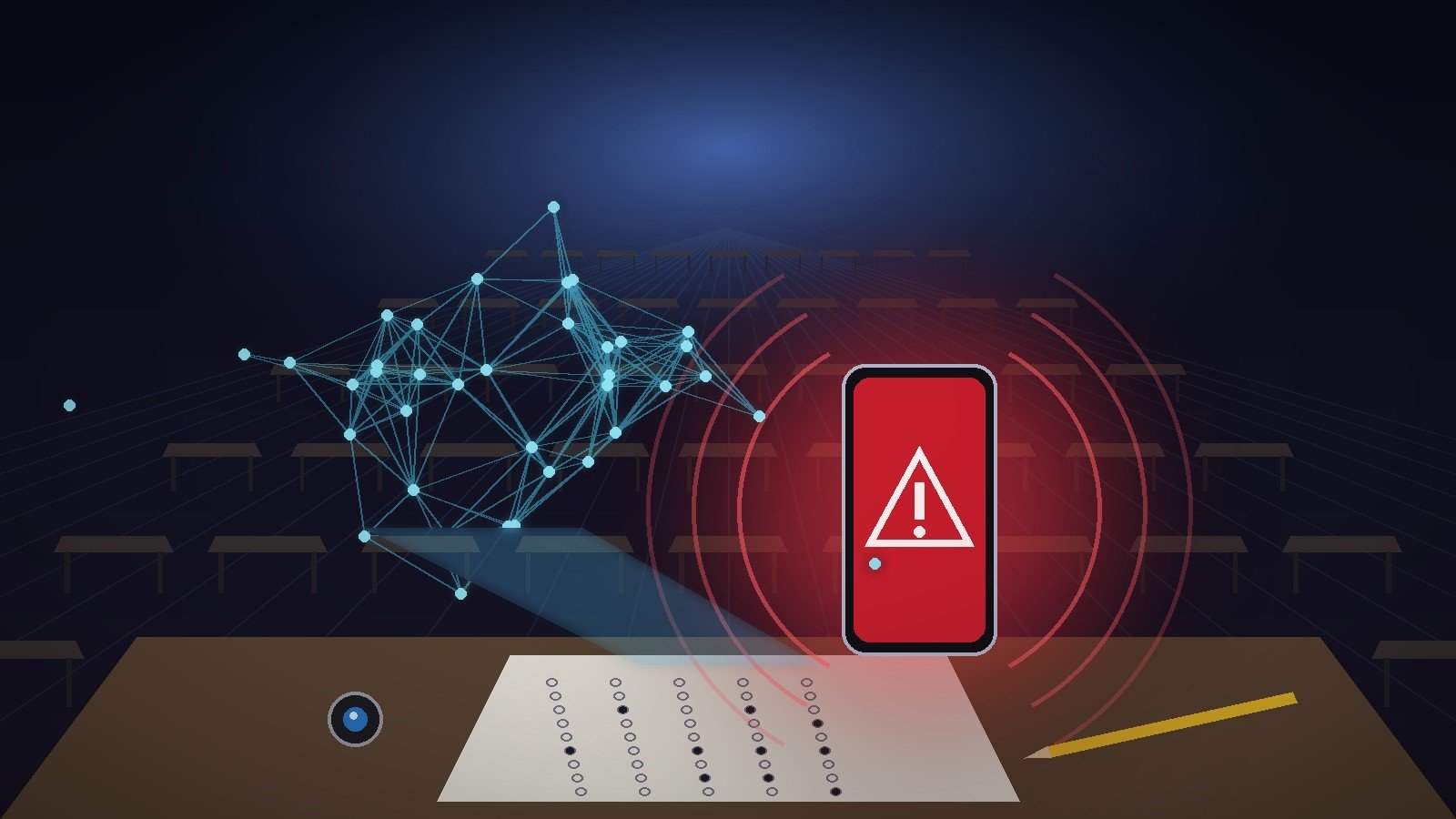
A microcamera, a smartphone and a chatbot have now cost a cabinet minister his job, as South Korea's AI cheating scandal claims its most senior casualty.
South Korean Education Minister Choi Kyo-jin resigned on Sunday, November 22, 2026, taking responsibility for the confusion caused by a wave of last-minute rules designed to stop artificial intelligence-assisted cheating on the country's national college entrance exam. President Lee Jae Myung accepted the resignation about an hour after Choi announced it, Yonhap News Agency reported, citing presidential spokesperson Kang Yu-jung. The exam, known as the Suneung or College Scholastic Ability Test (CSAT), was held last Thursday, November 19.
What happened on Sunday
In a statement released by his ministry, Choi said the changes made just before the test had inconvenienced the public, including test takers. "As the minister in charge, I believe I cannot escape criticism that we failed to prepare in advance," he said, according to Yonhap's translation, adding that now the exam had concluded he felt "a deep sense of responsibility." In a post on X, quoted by the Guardian, he also wrote that the exam had concluded without any major incidents.
The presidential office said the process to nominate a successor would follow due procedures. According to the Korea Herald, Lee has also instructed Prime Minister Han Seong-sook to concentrate on Suneung-related measures while the post is filled.
The rules that sparked the backlash
The resignation is less about a single cheating case than about how the government scrambled to respond. Yonhap reported that the ministry kept announcing new anti-AI cheating rules right up until the eve of the exam, leaving students and teachers confused. Among the changes: candidates could bring only pencils into exam rooms, and stickers were placed over buttons on their clothing to block hidden miniature cameras.
The Guardian reported that public Wi-Fi was blocked in testing areas, smart devices had to be switched off and handed in, bags left in corridors were checked for devices that were still on, and officials inspected candidates' glasses, watches, collars and sleeves. Most strikingly, authorities sent three emergency alerts to mobile phones nationwide during the exam, alarms that sounded at full volume, to flush out anyone who had not surrendered a phone. According to Korea JoongAng Daily, the ministry also barred students from bringing their own computer-marking pens, correction tape, erasers and pencil lead.
The numbers: 111 device cases
The crackdown did catch people. The education ministry said on Friday that 111 suspected cheating cases involving electronic devices were detected during the exam, Yonhap reported, and the Guardian said nearly half of them were found through the emergency alerts. The Korea Herald reported that the cases included one involving smart glasses and another involving a miniature camera and wireless earphones.
The ministry's examination misconduct committee is reviewing the cases and will decide penalties before scores are released on December 11, according to the Korea Herald. It is important to note that these are suspected cases of device possession or use under review; outcomes for individual students have not been announced.
How a tax exam confession triggered it all
The crisis began on Sunday, November 15, when the top scorer in this year's national tax accountant qualification exam publicly admitted to cheating. According to an earlier Guardian report, the candidate, who identified himself only by the surname Han, said he photographed exam questions with a microcamera, sent them to a generative AI tool and checked the answers on a smartphone. He had scored 397.5 out of 400 in the first round, with only one wrong answer out of 160 questions. Seoul police said they had received his written confession and assigned the case to investigators.
Choi's own words then deepened the pressure. Asked at a parliamentary hearing whether he was 100 percent confident that AI-assisted cheating could be detected, the 72-year-old replied, in Yonhap's translation, "I don't think I could, because of my age." The remark drew public backlash, and the Guardian noted that Choi did not appear at press conferences in the days before the exam, leaving a vice minister to announce the measures. Teachers' unions criticised the government's response as belated.
Why this matters beyond Korea
The Suneung is often described as one of the most consequential days in a South Korean student's life, and the country goes to great lengths to protect it, from rescheduling flights during the English listening test to delaying the stock market's opening. That is why a breach of trust lands so hard. "People trusted the system and played by it," one expert told Korea JoongAng Daily. "If AI breaks through it, there is nothing left to rely on."
Our analysis: the episode is an early, very public stress test of what happens when cheap wearable cameras meet capable AI models in a high-stakes, closed-book setting. Korea's response leaned on physical controls, such as confiscating devices, covering buttons and blaring alerts, rather than technical detection of AI use. Education systems elsewhere that rely on in-person standardised exams are likely to watch closely, because the same combination of hardware and AI tools is widely available.
What comes next
Several threads remain open. A new education minister must be nominated. The misconduct committee will rule on the 111 cases before December 11. According to the Korea Herald, the government and the ruling Democratic Party have suggested extending the exam ban for AI-assisted cheating to 10 years, potentially applying it retroactively to this year's test; Korea JoongAng Daily reported that the party has introduced a bill to that effect, replacing a regime under which a caught cheater is typically barred only for the following year. Authorities are also weighing a review of past entrance exams for possible AI-assisted cheating based on credible tips, the Korea Herald said.
For now, South Korea has become a cautionary case study: the AI era's first exam-season crisis has already reshaped one of the country's most important rituals, and claimed a minister along the way.