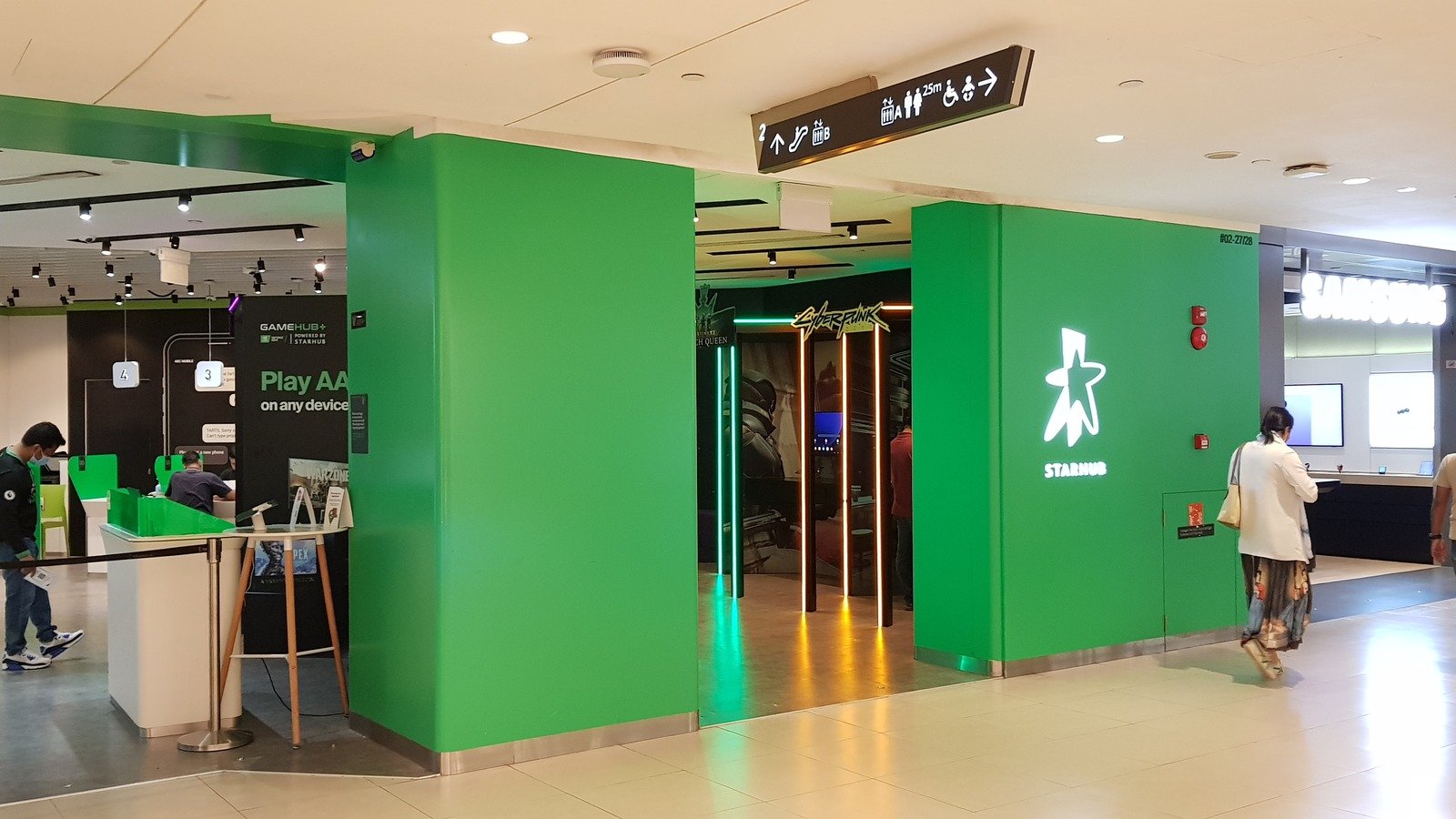
Singapore's two challenger telcos are joining forces, and if regulators sign off, the city-state's four-way mobile fight becomes a three-way race.
StarHub and Keppel announced on Tuesday, November 24, that they have signed definitive agreements to combine StarHub with Keppel-controlled M1 in an all-share transaction, creating a group serving about 4.1 million customers. The deal, unveiled before the Singapore market opened, still needs approval from regulators and shareholders, and is expected to close in the first half of 2027, according to StarHub's official announcement.
What was announced
Under the agreement, StarHub will absorb M1 by issuing new shares to M1's owners rather than paying cash. M1 would become a wholly owned StarHub subsidiary, and Keppel, which controls M1, would become a substantial shareholder in the enlarged StarHub. Both companies requested a trading halt on Tuesday morning ahead of the announcement, CNA reported.
In a separate move, StarHub said it has exercised its call option to buy Circles.Life's Singapore mobile business, including its subscriber base, employees and brand assets. That purchase is expected to complete alongside the M1 merger. StarHub also selected Circles X, Circles' AI-native telco operating platform, to support some of its consumer mobile services.
Until the merger closes, the companies said StarHub and M1 will keep operating and competing independently, and customers of both will retain their existing plans, services and points of contact.
The numbers behind the deal
StarHub will issue about 651.7 million new shares to M1's shareholders, equal to roughly 27.4% of StarHub's enlarged share capital. Keppel will effectively hold 23.0% of the combined company, with the remaining 4.4% going to M1's other shareholders. M1 will come into the group carrying S$380 million of net debt, including other adjustments.
How much the deal is "worth" depends on which yardstick you use. StarHub says that, based on a pro forma value of S$1.50 per StarHub share, which includes the estimated S$1.1 billion net present value of cost savings from the merger, the new shares imply an enterprise value of S$1.36 billion (about US$1.05 billion) for M1. At StarHub's market price, however, the new shares are worth about S$677.7 million, which together with the debt puts M1's enterprise value closer to S$1.06 billion, according to The Business Times. StarHub shares closed at S$1.01 on Monday.
The companies expect about S$110 million in annual run-rate cost savings by 2030 across network, infrastructure, commercial and IT functions. On a pro forma basis, the combined group would have generated around S$2.6 billion in revenue and S$0.5 billion in EBITDA in the 12 months to June 2026, with a net-debt-to-EBITDA ratio of 2.9 times. The merger would also consolidate ownership of Antina, the existing network joint venture between the two operators.
How we got here
The deal ends a long search for a buyer for M1. Keppel had originally agreed to sell M1 to Simba, Singapore's fourth mobile operator, in a deal valued at about S$1.4 billion. That transaction lapsed in May after the Infocomm Media Development Authority (IMDA) suspended its review while investigating Simba's unauthorised use of spectrum, The Business Times reported. Simba admitted to the unauthorised spectrum use on November 17, and IMDA is still reviewing its response to a show-cause notice.
StarHub and Keppel first confirmed in September that they were in talks. Tuesday's valuation came in slightly below analysts' expectations: Macquarie Capital's Foo Zhiwei had estimated M1's enterprise value at S$1.16 billion to S$1.25 billion, while Bloomberg Intelligence's Chris Muckensturm had pencilled in S$1.1 billion to S$1.2 billion.
For Keppel, the deal is part of an asset-sale programme that began in October 2020. Keppel plans a two-stage exit, first deconsolidating M1 and later gradually selling down its StarHub stake, and has committed to staying invested for at least 12 months after completion. Based on StarHub's recent share price, it estimates a pro forma accounting loss of S$375 million on the divestment, though the final figure will depend on StarHub's share price at completion, DealStreetAsia reported.
What the executives said
StarHub chief executive Nikhil Eapen framed the deal as the end of an era. "Thirty years ago, Singapore began liberalising its telecommunications market, and StarHub and M1 answered the call," he said in the announcement. "That chapter is now closing. Four operators competing for the same mature market will no longer deliver the infrastructure Singapore needs next, and consolidation is the answer."
Matt Williams, StarHub's CEO-designate, said the combination "gives us the scale to invest, creating powerful, secure and modern mobile and broadband networks for the whole of Singapore." M1 chief executive Manjot Singh Mann pointed to recent telco mergers in Southeast Asia, saying they "have resulted in revenue uplifts for the combined entities."
Why it matters
If approved, the merger would cut the number of mobile network operators in Singapore from four to three. Bloomberg Intelligence data cited by The Business Times put Singtel at roughly 43% of mobile subscribers as of June, followed by M1 at about 22%, StarHub at 21% and Simba at 14%. On those figures, a combined StarHub-M1 would hold a subscriber share comparable to Singtel's, not counting Circles.Life's roughly 290,000 subscribers.
That cuts both ways. Analysts have said a combined StarHub and M1 could be large enough to take on Singtel, but that consolidation could also ease the pricing pressure that has benefited consumers, CNA noted. The companies argue that greater scale and cash flow will fund investment in 5G, fibre, cloud, cybersecurity and AI-ready infrastructure. Whether that outweighs the loss of a competitor is exactly what the regulator will have to weigh.
What happens next
The merger needs approval from IMDA and the Ministry of Digital Development and Information, plus votes at separate extraordinary general meetings of StarHub and Keppel shareholders. Asia Mobile Holdings, a controlling shareholder of StarHub, will abstain at StarHub's meeting, and Temasek, Keppel's controlling shareholder, will abstain at Keppel's. J.P. Morgan is advising StarHub and DBS is advising Keppel. Investors will get their first chance to react when trading in both stocks resumes, while employees and customers wait to see how the integration plays out before the targeted first-half 2027 close.
Image: Earthkingfather / Wikimedia Commons, CC BY-SA 4.0