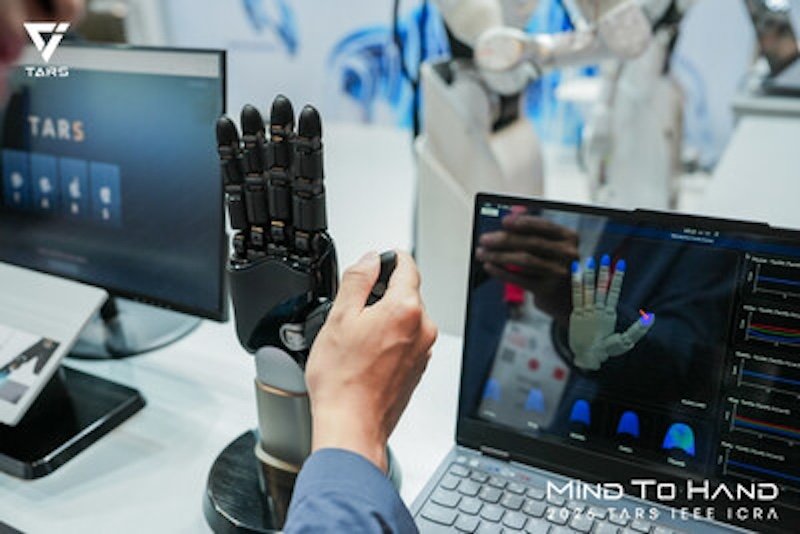
Robotics pioneer TARS has concluded a triumphant appearance at the IEEE International Conference on Robotics and Automation (ICRA 2026), captivating the global robotics community with the international debut of its groundbreaking DexHand platform. The unveiling drew massive crowds of academic researchers, industrial automation specialists, and venture capitalists, signaling a transformative milestone in the development of real-world embodied artificial intelligence capable of performing complex physical tasks with human-level dexterity.
For decades, artificial intelligence made monumental strides in processing text, imagery, and code, while robotic hardware lagged behind in its ability to physically interact with the chaotic, unstructured real world. The traditional industrial gripper—rigid, bulky, and limited to simple pinch-and-place motions—remained a severe bottleneck in automating manufacturing lines, laboratory research, and domestic assistance. The DexHand addresses this fundamental deficiency through an anthropomorphic design featuring multi-axis articulated fingers, high-density tactile sensor arrays, and ultra-low-latency micro-actuators that replicate the mechanical compliance of human hands.
What sets the DexHand platform apart from previous robotic appendages is its integration with TARS’s proprietary embodied foundation models. Rather than relying on rigid, pre-programmed kinematic trajectories, DexHand utilizes end-to-end multimodal AI trained on millions of real-world interactions and physics-based simulations. During live interactive demonstrations on the ICRA exhibition floor, the robotic hand effortlessly demonstrated dexterous manipulation across a staggering variety of delicate objects, seamlessly transitioning from unscrewing tiny mechanical screws to handling raw eggs, folding fragile textiles, and operating power tools with nuanced force adjustments.
Conference attendees and industry specialists marveled at the system's real-time adaptability. When engineers introduced unforeseen disturbances—such as abruptly bumping the hand during a task or altering an object's weight and surface friction—DexHand dynamically recalibrated its grasp pressure within milliseconds. The integrated tactile skin provides continuous sensory feedback, allowing the underlying intelligence to feel slippage, texture, and compliance, mirroring the biological nervous system’s instinctive motor control reflexes.
The industrial implications of TARS’s breakthrough are profound. Modern manufacturing environments, semiconductor assembly cleanrooms, and automated logistics warehouses have reached the limits of conventional automation. Deploying dexterous embodied AI hands capable of manipulating fine electronics, routing flexible wiring harnesses, and managing intricate assembly tasks could unlock hundreds of billions of dollars in industrial efficiency while reducing repetitive strain injuries for human workforces.
As ICRA 2026 closed its doors, the discourse among leading roboticists made one reality abundantly clear: the boundary between software-bound intelligence and physical agency is dissolving. TARS’s triumphant showcase of the DexHand proves that the next frontier of artificial intelligence will not be confined to server racks or digital screens, but embodied in physical machines capable of navigating and reshaping our physical world.