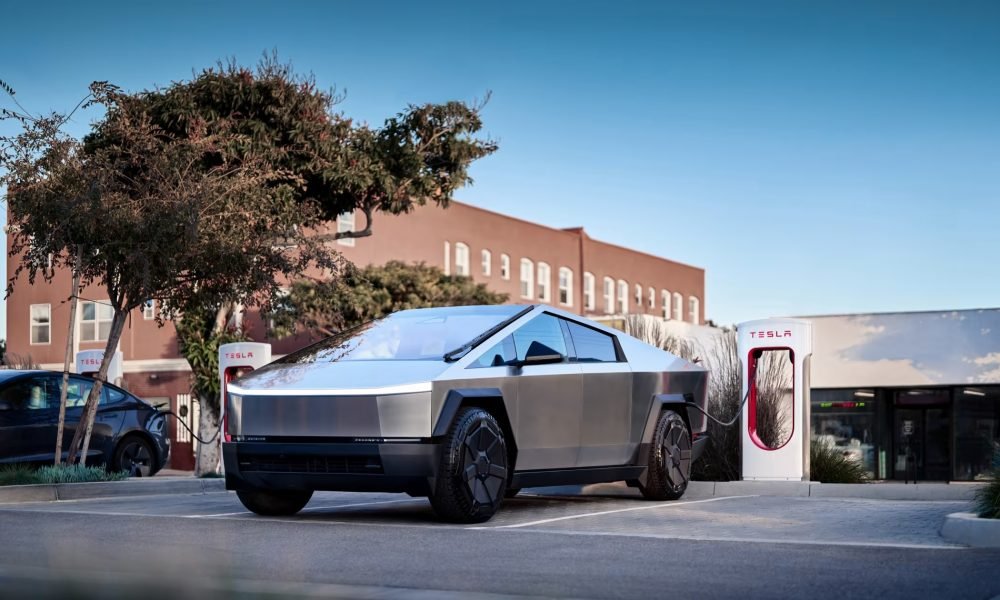
Tesla has officially deployed an advanced navigation update across its global vehicle fleet, enhancing its in-car Supercharger visualization system by building directly on top of the Site Maps feature introduced earlier this year. The newly released over-the-air software upgrade transforms how drivers interact with Tesla’s charging infrastructure, introducing real-time stall-specific power throttling diagnostics, intelligent trailer-friendly parking routing, and interactive foot-traffic navigation to adjacent retail amenities. By integrating deeper layers of dynamic charging telemetry directly into the primary vehicle center console display, Tesla continues to widen its software lead over legacy automotive manufacturers attempting to demystify the electric vehicle charging journey.
When Tesla initially unveiled Site Maps, the tool provided drivers with an aerial layout of complex charging plazas, helping owners locate chargers hidden behind multi-level shopping centers or within sprawling commercial parking garages. This latest update takes the visual interface significantly further by converting passive overhead blueprints into real-time operational hubs. Drivers approaching a destination Supercharger can now view an interactive map highlighting which specific stalls are delivering full peak output, which stalls are temporarily restricted or operating at reduced kilowatt capacity, and which spaces are configured as drive-through bays specifically engineered for electric vehicles towing trailers, boats, or cargo racks.
A major technical breakthrough within the update is the integration of predictive battery thermal preconditioning tied directly to the exact stall assigned by the car’s automated navigation. Rather than conditioning the battery pack for generic high-output charging, the vehicle communicates with the Supercharger station’s local microgrid controller. If the system routes the driver to a V4 350-kilowatt cabinet, the pack preconditions to an optimal chemical temperature profile designed to absorb maximum amperage immediately upon plug-in. Conversely, if high station congestion necessitates plugging into a load-shared V2 or V3 dispenser, the vehicle adjusts its thermal management schedule accordingly, conserving onboard energy that would otherwise be wasted on excessive liquid cooling or heating.
The expansion arrives at a critical inflection point as the North American Charging Standard (NACS) becomes the undisputed continental benchmark, bringing a massive influx of third-party electric vehicles from Ford, General Motors, Rivian, and others into the Supercharger network. With station congestion on the rise, clear visual guidance and precise stall allocation are essential to prevent parking gridlock and user frustration. By giving drivers clear, immediate visibility into stall availability, dispenser orientation, and cable reach limitations, Tesla’s enhanced software minimizes queue friction and shortens total station dwell times—a metric vital to maximizing network throughput and operator profitability.
Moving forward, the rollout highlights Tesla’s enduring philosophy that electric mobility must be treated as a holistic, software-defined ecosystem rather than a collection of isolated vehicular components. While competitor charging networks struggle with broken screens, opaque billing protocols, and confusing physical access, Tesla leverages seamless vertical integration to turn every routine charging stop into a friction-free experience. As autonomous robotaxi fleets loom on the company’s technological horizon, these granular site-level mapping and automated stall-routing capabilities serve a dual purpose, laying the indispensable digital navigational foundation for driverless vehicles capable of docking and charging entirely on their own.