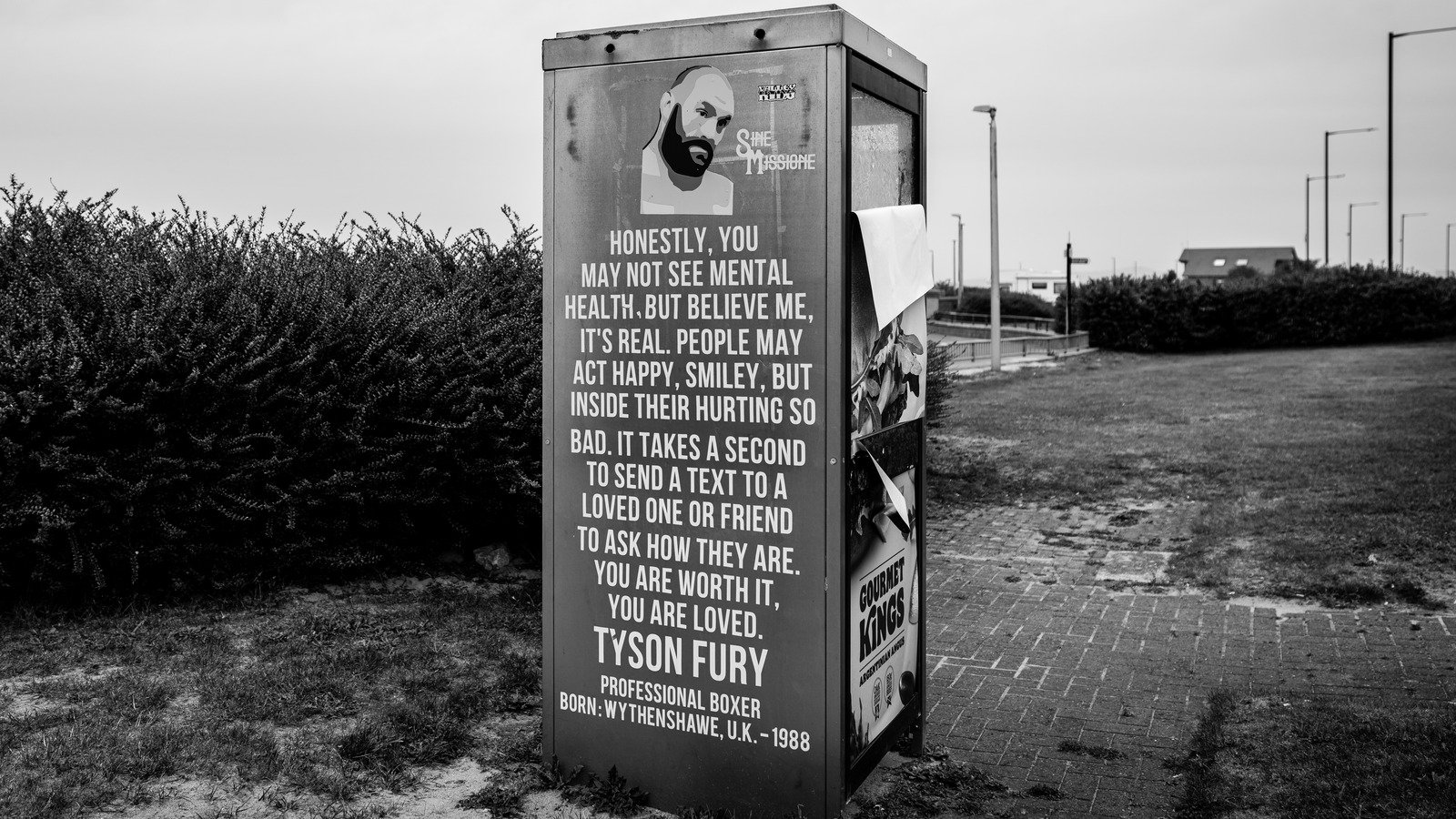
Tyson Fury has revealed he was diagnosed with schizophrenia and bipolar disorder during the darkest years of his career, and he is telling the story just as he prepares for the biggest all-British fight in years.
Fury opens up in new Netflix documentary
British heavyweight Tyson Fury says he was diagnosed with schizophrenia soon after his famous world title win over Wladimir Klitschko in 2015. The 38-year-old makes the revelation in a feature-length Netflix documentary, simply titled Tyson Fury, which is released on Friday, 27 November, according to BBC Sport.
Fury says that during that period he heard voices in his head threatening to hurt him and his family. He and his wife Paris describe how the diagnosis came after he was admitted to hospital with a suspected heart attack in June 2016. Doctors concluded he had suffered an anxiety attack, and after he left hospital a diagnosis of schizophrenia and bipolar disorder was confirmed.
The timing is striking. The film arrives two weeks before Fury faces Anthony Joshua in Cardiff on 11 December, a fight that will also be streamed live on Netflix.
“A living version of the pits of hell”
In the documentary, Fury does not soften what he went through. “Words can't explain the darkness I was in,” he says. “It was like a living version of the pits of hell. I thought I would end up in a padded room with the door locked, and that scared me so much.”
He describes the anxiety as “crippling” and says that was what finally pushed him to see a psychiatrist in London. “She asked me a gazillion questions, and I ticked all the boxes. Depression, anxiety, bipolar disorder,” he says.
Fury also recalls believing that the radio had started talking to him while he was in hospital, and that voices were threatening to kill him and his family. Paris Fury, who married him in 2008, says doctors told her he was “a mild schizophrenic”. She admits she did not accept it at first, but when bipolar disorder was explained to her, she thought, “Wow, that's him to a T,” Sky Sports reported.
The film also features his father, John Fury. “When I look back, it's always been there,” he says, adding that he did not want to see a depressed child at the time. “But I understand now. It's an illness, a terrible illness. I suffer with it myself,” he says in comments published by Deadline.
From world champion to rock bottom
The revelation fills in one of the most dramatic chapters in modern boxing. Fury shocked the sport by beating Klitschko in November 2015 to become world heavyweight champion. He was due to face the Ukrainian again in October 2016, but withdrew after being declared medically unfit to fight.
In the months after the Klitschko win, Fury gained a large amount of weight and struggled with drug and alcohol addiction, problems he has spoken about publicly before. “It got that bad I was hearing voices in my mind,” he says in the film. “I wouldn't be able to sit and have a conversation because I'd be hearing stuff in my mind... I never got a break from it for years.”
Mental health has long been part of Fury's public story. What is new is the specific diagnosis of schizophrenia, a condition the NHS describes as a form of psychosis whose symptoms can include hallucinations, delusions and muddled thoughts and speech. The NHS describes the main symptom of bipolar disorder as extreme changes in mood.
The Halloween night that started the comeback
Fury identifies a night out at Halloween in 2017 as his turning point. Wearing a glow-in-the-dark skeleton costume, he says he looked at the young people around him and felt ashamed. “I had the world in my hands and I threw it all away, and now I'm a fat mess addicted to alcohol,” he recalls.
He says that moment began a comeback built around his family and a return to training. He went on to return to professional boxing three years after the Klitschko fight and won another world title by beating Deontay Wilder in 2020. In the documentary he credits his wife and children for getting him through. “The most successful thing I have in my life is my family, my kids and my wife,” he says.
The 90-minute film is from Banijay's Optomen, is a feature by Lucy Wilcox that traces Fury's life from childhood to the top of the sport, according to Deadline.
Why it matters, and what comes next
Analysis: it is rare for an active heavyweight to speak this openly about a diagnosis like schizophrenia, a condition that still carries heavy stigma. Paris Fury's own first reaction in the film, that schizophrenia was something that happened to “maniacs”, shows how common that stigma is. A fighter of Fury's profile describing his symptoms in plain language, and explaining how he got help, could encourage others to seek support.
It also adds a new layer to an already huge event. Fury against Joshua is the all-British heavyweight fight fans have waited years to see, and the documentary sets up the story of a fighter who, by his own account, once believed his career and life were over. The next milestones are the film's release on Netflix on 27 November and fight night in Cardiff on 11 December.
If you or someone you know is struggling with their mental health, please reach out to a doctor or a local mental health helpline.
Image: Ian Livesey / Wikimedia Commons, CC0