Sales more than doubled to a record $54.9 billion, the AI order book swelled past $132 billion, and Dell raised its full-year forecast for the third time this year, adding a $25 billion buyback on top.
Dell Technologies reported the biggest quarter in its 42-year history on Tuesday, November 24. Revenue for the three months ended October 30 rose 103% from a year earlier to $54.9 billion, driven by companies and cloud providers buying AI servers, according to Dell’s official results announcement. The Texas computer maker also raised its revenue forecast for fiscal 2027 to $202 billion from $192 billion, and its board approved an extra $25 billion for share buybacks.
The results came out after the US market closed, which was early Wednesday morning India time. Dell shares rose about 5% in extended trading, Reuters reported.
A beat on every headline number
Dell beat expectations by a wide margin. According to CNBC, analysts polled by LSEG had expected revenue of $49.32 billion and adjusted earnings of $6.59 per share. Dell reported $54.94 billion and $9.45. On a GAAP basis, diluted earnings per share were a record $8.82, up 287% from a year earlier.
The guidance was just as strong. For the fourth quarter, Dell expects revenue of about $56.3 billion, up 69%, and adjusted earnings of $8.40 per share. LSEG consensus had pointed to $53.61 billion and $7.50, CNBC said. For the full year, Dell now expects:
- Revenue of $202 billion, up 78%, compared with its previous target of $192 billion and the $194.48 billion Wall Street expected, according to LSEG data cited by Reuters.
- AI-optimised server revenue of $78 billion, up from its earlier $74 billion forecast.
- Adjusted earnings of $29.68 per share, compared with the previous $25.50.
Reuters noted that this is the third time this year Dell has raised its annual revenue and profit forecasts.
Inside the numbers: servers carry the company
Dell’s Infrastructure Solutions Group (ISG), which sells servers, storage and networking, did almost all of the work. Its revenue nearly tripled to $42.0 billion, up 198%, and its operating income rose 308% to $7.1 billion. Within ISG:
- AI-optimised servers brought in a record $22.0 billion, up 291%.
- Traditional servers and networking grew 235% to $15.0 billion.
- Storage rose 24% to $4.9 billion, a record for a third quarter.
The order book matters even more than revenue. Dell booked $60.2 billion of AI orders during the quarter and finished with a record AI backlog of $132.3 billion. More than 7,500 customers are now deploying Dell AI Factories, its bundle of servers, storage, networking and software. On the analyst call, as reported by CRN, Chief Operating Officer Jeff Clarke said that “we have had no customers reschedule business” and that “the backlog continues to be very firm.”
The cash numbers were strong too. Operating cash flow was a record $4.5 billion for a third quarter and $10.8 billion so far this year. Dell returned a record $4.9 billion to shareholders through buybacks and dividends, and the board added another $25 billion to its authorisation to repurchase Class C shares.
The weak spot: PCs
Dell’s personal computer business barely grew. The Client Solutions Group, which makes laptops and desktops, posted revenue of $12.9 billion, up 3%, while its operating income fell 6% to $704 million. CNBC said analysts had expected about $14.33 billion. According to Reuters, that 3% growth compares with 20% in the previous quarter, as customers put their spending into servers and storage.
Memory chips are a big part of the problem. Shortages of DRAM and NAND have pushed up the cost of building devices. Reuters said both Dell and rival HP warned that memory costs will keep squeezing them, and that Dell expects the shortage to last into 2027. HP, which also reported on Tuesday, posted fourth-quarter revenue of $16 billion, ahead of the $15.42 billion analysts expected. Clarke told analysts the memory crunch “continues clearly into 2027,” CRN reported, adding that “while the rate of inflation won’t be the same as we saw in 2026, we still believe the market is inflationary.”
How Dell got here
A few years ago Dell made most of its money from PCs. In its statement, Clarke described the shift directly: “We are now a different company, with Infrastructure Solutions Group (ISG) driving the vast majority of our profit and growth.” On the call, CRN reported, he said ISG produced 38% of Dell’s revenue in fiscal 2024, the year it began selling AI servers. Over the last four quarters, that share has risen to 68%. ISG’s share of operating income has climbed from 54% to 83% over the same period.
Chief Financial Officer David Kennedy said in the results release that non-GAAP operating expenses fell to 7% of revenue, the lowest in the company’s history. He said running the company more efficiently is driving higher profitability “even as AI servers become a larger part of our business.”
Why it matters
The timing makes the results more important. They landed during a fragile week for AI stocks. Overnight Nvidia fell 5.9% and Anthropic slipped below its IPO price, and Asian chip-heavy markets sold off sharply on Wednesday morning, according to a Reuters markets report that also cited Dell’s after-hours gain.
Analysis: Dell sits between chipmakers like Nvidia and the businesses that actually install AI systems, so its order book is one of the clearer readings of real demand. A backlog of more than twice the quarter’s total revenue, with management saying no customer has pushed orders back, is a direct counterpoint to recent worries that AI spending is slowing. Backlog is not revenue, though. Turning it into sales depends on Dell getting enough components, and the company itself is warning that memory supply will stay tight.
What to watch next
The next checkpoint is Dell’s fourth quarter, which ends in late January. Investors will watch whether revenue reaches the $56.3 billion guidance, how much of the $132.3 billion backlog ships, and whether memory costs eat into margins. PC demand is the other question, since higher component prices are making devices more expensive. Clarke does not expect that pressure to ease soon: “As we look into next year, the gap between component supply and end user demand continues to widen,” he told analysts, according to CRN.
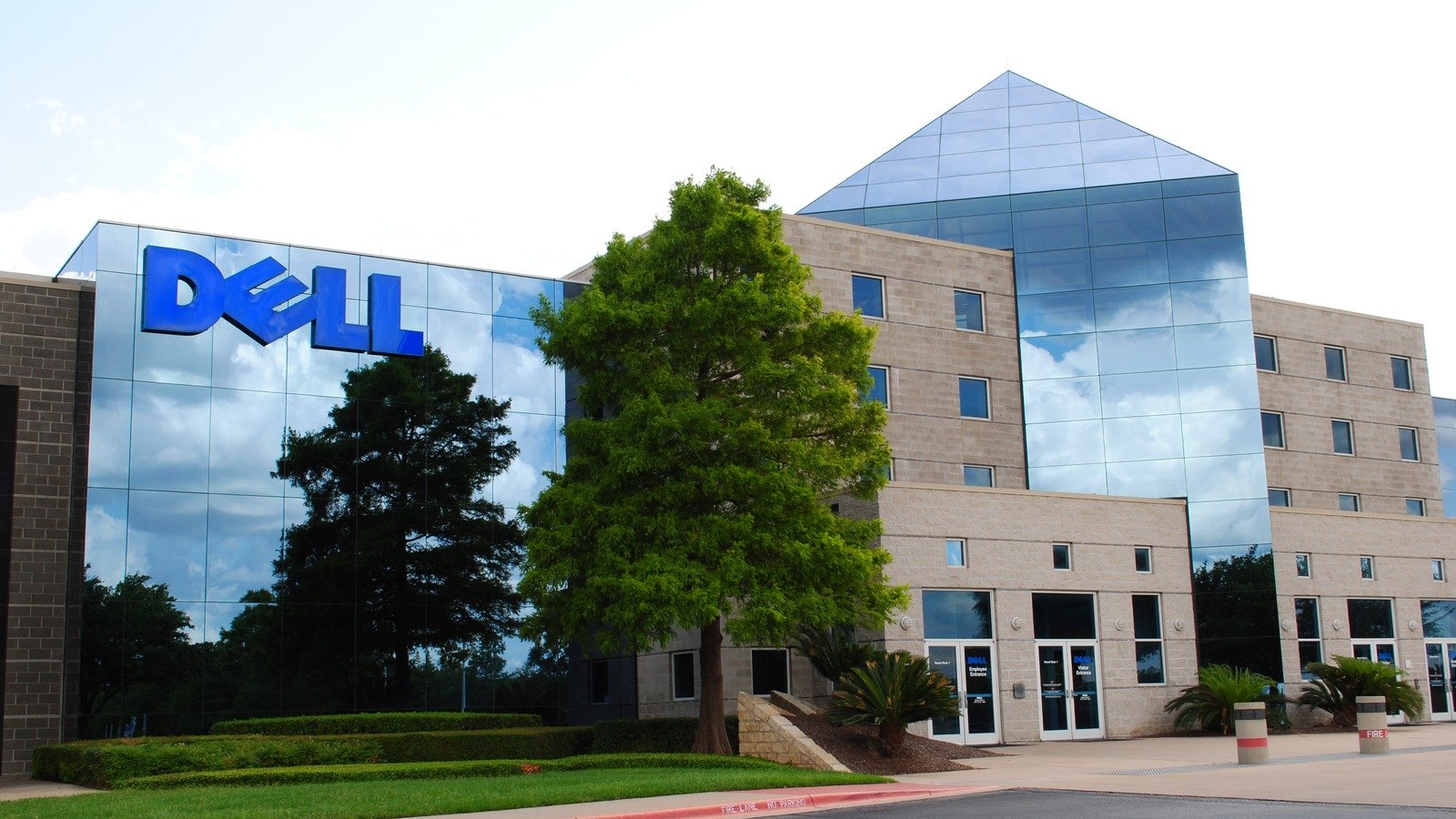
Image: Eustress / Wikimedia Commons, CC BY-SA 3.0