Americans clicked "buy" harder than forecasters expected, even as fewer of them walked into stores.
US shoppers spent a record $13.1 billion online on Black Friday, November 27, up 11.1% from a year earlier and about $200 million above Adobe's own forecast, according to final figures from Adobe Analytics released on Saturday. The result came despite inflation running at 3.8% and high gas prices squeezing household budgets, according to Reuters. A separate count from Mastercard showed total retail sales, in stores and online, up 5.8%, while store foot-traffic trackers reported fewer visitors than last year.
A record day online
Adobe had predicted in September that Black Friday would bring in $12.9 billion, up 9.2%. Actual spending beat both the dollar figure and the growth rate. The day followed a strong Thanksgiving, when Americans spent $7.1 billion online, up 10.4%, Adobe data cited by Reuters showed.
Shoppers snapped up popular toys and AI-powered gadgets, with electronics and gaming among the strongest-selling categories. But they also used the discounts to stock up on everyday basics such as cleaning supplies, pet care products and personal hygiene items, Adobe said. That fits a theme Adobe has highlighted all season in its holiday shopping report: value-first shoppers increasingly turning to holiday sales to save on essentials, not just big-ticket gifts.
Discounts, however, were not dramatic. Adobe's figures showed price cuts peaking below 30% in key categories, including about 29% off electronics, 28% off toys and 24% off both apparel and televisions.
The in-store picture: fewer visits, bigger spending
Online growth was only part of the story. Mastercard SpendingPulse, which tracks in-store and online sales across all payment types including cash, said US retail sales excluding gas and autos rose 5.8% on Black Friday compared with last year, according to Mastercard. Its e-commerce measure rose 13.4%, while in-store spending grew 3.8%, which Mastercard called the strongest Black Friday for physical stores since 2022. Mastercard noted that its figures are not adjusted for inflation.
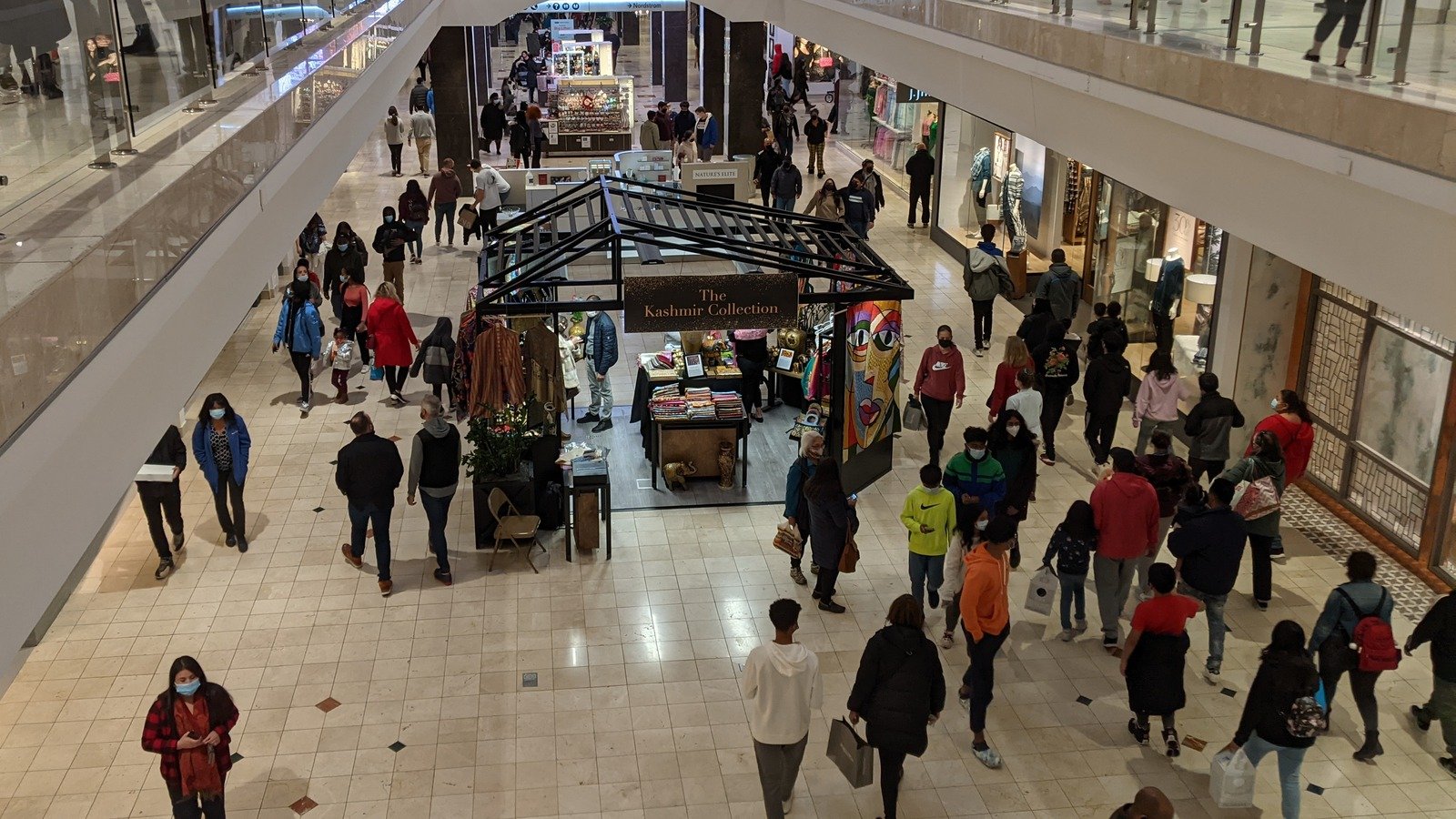
Foot traffic told a softer story. Sensormatic Solutions, which counts visitors at store entrances, said US retail visits were down 4.2% on November 27, though traffic was up 250.3% compared with the previous Friday, according to Sensormatic. Luxury and outlet stores did better than average, with traffic down just 2.2% and 2.7% respectively. Geospatial analytics firm PassBy put store visits down 2.2% at nearly 930 million, Reuters reported.
Different trackers use different methods, so the numbers don't line up neatly. Mastercard's 13.4% online growth, for example, differs from Adobe's 11.1%. But together they point in the same direction: fewer trips to stores, with shoppers who did go in spending more.
Tech led the way, and AI is changing how people shop
Mastercard said electronics and software spending rose 7.9% on Black Friday after a huge run earlier in the month, when the category jumped 37.9% on November 18 and 43.5% on November 19, the week Grand Theft Auto VI and other video games launched. Electronics and software spending also climbed 19.2% on Thanksgiving Day as early promotions kicked in. Apparel grew 4.4% and jewelry 4.6% on Black Friday.
"Black Friday showed an adaptable consumer who remains willing to spend while being thoughtful about where, when and how they do so," said Michelle Meyer, chief economist at the Mastercard Economics Institute. "Tech was a standout, particularly software, with spending on video games and AI tools showing up uniquely this year."
AI shopping tools are also becoming a bigger part of the picture. Adobe said traffic to US retail sites from AI chat services and AI-enabled browsers, measured when a shopper clicks a link, doubled from last year's Black Friday, and those AI-referred visits converted into purchases 68% better than other traffic such as social media and paid search. A year earlier, that gap was 38%.
Why it matters
Black Friday is a key early test of how much consumers are willing to spend in the final stretch of the year. The National Retail Federation expects November–December holiday retail sales to rise 4.2% to just above $1 trillion, Reuters reported, though much of the growth will reflect higher prices rather than more goods. A November NRF survey found 82% of consumers are taking steps to manage holiday costs, such as buying cheaper gifts.
That is the key caveat for anyone reading the headline number. Spending figures measure dollars, not volume, so part of the gain comes from inflation. Still, Adobe's tally beat its own projections, and Mastercard's in-store growth was the strongest for a Black Friday since 2022, which suggests shoppers are being careful rather than pulling back altogether.
Sensormatic's Grant Gustafson summed up the shift: "Our data indicates the 2026 shopper is increasingly intentional, value-conscious and mission-driven." He said consumers are "leaning more heavily on the digital tools available to them to find the best deals before heading in-store."
What comes next
The holiday weekend isn't over. Adobe expects Cyber Monday, on November 30, to bring in $15.1 billion in online spending, up 6.2%, which would make it the first single day to top $15 billion in US online sales. It forecasts about $47.5 billion in total online spending across the five days from Thanksgiving through Cyber Monday. Buy now, pay later is expected to account for $1.09 billion of Cyber Monday spending, up 5.3%, Reuters reported.
For the full November–December season, Adobe has forecast a record $275.1 billion in US online spending. Mastercard's Meyer expects the usual slowdown after Black Friday, followed by fresh waves of activity around shipping cutoffs and a final in-store push before Christmas. "Black Friday is one of the peaks, but holiday shopping comes in waves," she said.
Image: G. Edward Johnson / Wikimedia Commons, CC BY 4.0